Discipline Is Not What Most People Think

Partially built cinder block house with open window and door spaces beside a neatly stacked pallet of blocks, symbolizing discipline, purpose, and steady progress.

The word discipline often has a negative tone.

For many people it sounds like something rigid, strict, and monotonous — waking up early every day, following strict routines, and forcing yourself to do things you don’t want to do.

But discipline doesn’t always look like that.

While building Equipido, I’ve probably spent more than 2,500 hours working on the platform.

Yet I’ve never really experienced it as discipline in the traditional sense.

I didn’t wake up every morning thinking, I must force myself to do this.

Instead, I had something driving me forward.

A purpose.

A goal.

I wanted to create something that could genuinely help people understand themselves better and grow from that understanding.

When you have that kind of purpose, long hours don’t always feel like discipline.

They feel like progress.

There were periods where I could wake up very early, work long days, and stay focused for hours — not because I forced myself to, but because I was driven by something meaningful.

So maybe discipline isn’t always about strict routines.

Sometimes discipline is simply what happens when purpose becomes strong enough.

Want to understand what truly fuels your goals and turns purpose into consistent action? Learn more about the Goal Style Test.

Was this article helpful?
YesNo

Similar Posts

  • |

    When You Lose Your Drive

    There was a time in my life when I couldn’t wait to get out of bed in the morning.

    I was excited about what I was building. I attended meetings, listened to several audio programs every day, read constantly, and invested countless hours in personal growth. More importantly, I loved helping other people pursue their goals and dreams. It didn’t feel like work. It felt meaningful.

    Looking back, I realize how much energy and enthusiasm I had during that period of my life. Then something changed.

    A series of experiences involving people I trusted deeply had a much greater impact on me than I realized at the time. To be clear, I take full responsibility for the decisions I made. The choices were mine. They always were. But the guidance, influence, and disappointment that followed left a mark that stayed with me for years.

    What surprised me most wasn’t what happened. It was what happened afterward.

    I lost my drive.

    The passion that had fueled me for years seemed to disappear. Activities that had once inspired me suddenly created resistance. I didn’t want to listen to educational material. I didn’t want to attend meetings. Books that once excited me stayed closed on the shelf.

    It wasn’t that I suddenly disliked personal development. It wasn’t that I hated the business environment. It wasn’t even that I had stopped believing in growth. The problem was that my mind had connected those experiences with pain.

    For years, I tried to get that drive back. I read books about motivation. I studied goal setting. I learned about habits, mindset, success principles, and how the brain works. Sometimes I would find a new approach that seemed promising. It would work for a few months, and I would feel momentum building again.

    Then it would fade. And I would find myself back at the starting line.

    If you’ve ever experienced something similar, you know how frustrating that can be. Especially when you remember who you used to be. You know what you’re capable of. You know what it feels like to be driven. You know what it feels like to wake up excited about the future. Yet somehow, you can’t seem to get back there.

    For a long time, I thought the answer was to find a bigger goal. Or a stronger purpose. Or more motivation. So I kept searching. I read more books. I listened to more advice. I tried different systems and approaches.

    But eventually I began to question something.

    What if I was asking the wrong question?

    Instead of asking, “What is my purpose?” maybe I should have been asking, “Who do I want to become?” That shift changed everything.

    Recently, while reflecting on this journey, I decided to revisit some of the books I had collected over the last twenty years. My bookshelves are filled with books on leadership, personal growth, success, motivation, communication, and psychology.

    One of the books that stood out was Atomic Habits by James Clear. I had read it before. But this time, I looked at it differently.

    What struck me wasn’t the discussion about habits. It was the focus on identity. The idea that lasting change doesn’t start with goals. It starts with the person you want to become.

    That concept resonated with me far more than another goal-setting exercise ever could.

    If someone wants financial freedom, perhaps the first question isn’t, “How do I become financially free?”

    Maybe the better question is: “What kind of person creates financial freedom?”

    How does that person think? How do they spend their time? What habits do they practice consistently? How do they respond when things don’t go according to plan?

    The same can be asked about almost any goal in life. Before focusing on the outcome, perhaps we should focus on becoming the person capable of creating that outcome.

    Will this approach work for everyone? Probably not. And that’s an important point.

    We’re all different. We have different backgrounds, different personalities, different experiences, and different challenges. The tools that help one person move forward may not help another person at all. That’s okay.

    The goal isn’t to find a solution that works for everyone. The goal is to find what works for you.

    For me, this realization has been helpful because it shifted my attention away from constantly searching for motivation and toward building a stronger foundation. Instead of chasing a feeling, I’m trying to focus on becoming the kind of person I want to be.

    The truth is that we all go through periods where we struggle. We lose confidence. We lose momentum. We question ourselves. We wonder if we’ll ever find our passion again.

    But perhaps the answer isn’t always to look further ahead. Sometimes the answer is to look deeper. To ask different questions. To challenge old assumptions. And to remember that growth isn’t always about finding the perfect path.

    Sometimes it’s simply about taking the next step and continuing to move forward.

    If you’ve been struggling to find your drive, your purpose, or your motivation, I hope this reflection gives you something to think about. Not because it contains all the answers. But because it might help you ask a different question.

    And sometimes, a different question is exactly where change begins.

    Related reading: Losing your drive can bring doubt and uncertainty, but small daily actions can also help rebuild momentum. Read: Fear and Doubt Are Part of Growth and Are Your Habits Changing Your Life?

    Want to understand what truly drives you and how to rebuild momentum when motivation fades? Learn more about the Goal Style Test.

    Was this article helpful?
    YesNo
  • | |

    Understand Yourself First

    Personal development is often connected to books, habits, discipline, goals, leadership, and taking action. All of those things matter.

    But I believe there is one part that is easy to overlook.

    Understanding yourself.

    Because if we do not understand ourselves, it becomes much harder to understand why we act the way we do, why some habits work for us and others do not, why certain goals motivate us while others create resistance, and why communication with other people sometimes becomes more difficult than it needs to be.

    That is one of the reasons I believe self-awareness is such an important foundation for personal growth.

    We can read a good book. We can listen to great advice. We can set goals. We can decide to change. But if we do not understand ourselves, we may still try to build our life in a way that does not really fit how we are wired.

    This does not mean that personality should become an excuse. It does not mean we should say, “This is just who I am,” and avoid growth.

    It means the opposite.

    When we understand ourselves better, we can grow in a smarter way.

    For example, when we talk about habits, it is easy to think that the same method should work for everyone. Wake up earlier. Follow the same routine. Use the same system. Set the same kind of goals. Measure progress the same way.

    But people are different. Some people are motivated by structure. Some need more flexibility. Some are driven by results. Some need meaning and connection. Some people like detailed plans. Others feel trapped by too many details. Some people move quickly and adjust as they go. Others need time to think before taking action.

    None of this is right or wrong. It is simply different.

    That is why I think personality tests and personality tools can be valuable. Not because they define everything about us, but because they can give us language for things we may already feel but have not clearly understood.

    A good personality tool does not put a person in a box. It helps a person understand the box they may already have been living inside without noticing it.

    When we begin to understand our own personality style, we can start asking better questions.

    Why do I react this way? Why do I avoid certain things? Why do I get energy from some situations and lose energy in others? Why do I communicate well with some people but struggle with others? Why do certain goals inspire me, while other goals feel heavy even when they are important?

    These questions can create real value.

    Because personal growth is not only about pushing harder. Sometimes it is about understanding better.

    If a person sets a goal in a way that does not fit their personality, the goal may be good, but the approach may be wrong. Then they may become frustrated and think they lack discipline, motivation, or willpower.

    But maybe the real issue is not the goal. Maybe the real issue is the system around the goal.

    A person may need more structure. Another person may need more freedom. One person may need accountability. Another may need a clear personal reason. One person may need a detailed plan. Another may need a simple first step.

    The same goal can require different paths depending on the person.

    That is one of the reasons I believe self-awareness can make habits stronger. When we understand ourselves better, we can design habits that have a better chance of lasting.

    We can stop copying everything from someone else and start asking:

    What works for me? What kind of environment helps me? What usually stops me? What gives me energy? What makes me lose focus? What kind of support do I need?

    That is not weakness. That is wisdom.

    The same is true with communication.

    Many conflicts do not happen because people are bad people. They happen because people see things differently, process information differently, make decisions differently, and communicate differently.

    One person may speak directly and think they are being clear. Another person may experience that same directness as pressure.

    One person may need facts and details before making a decision. Another person may want the big picture first.

    One person may want fast action. Another may need time to reflect.

    One person may show care by solving problems. Another may show care by listening.

    When we do not understand these differences, it is easy to misunderstand each other. We may think someone is difficult, uninterested, too slow, too intense, too emotional, too cold, too detailed, or too careless.

    But sometimes they are simply different from us.

    When we understand personality styles, we can become better at meeting people where they are. That can help at work. It can help in leadership. It can help in business. It can help in friendships. It can help in family life. It can even help with children, because a child may not communicate, learn, or respond in the same way as the parent.

    If we only communicate from our own style, we may miss the other person. But if we learn to understand their style, we may find a better way to reach them.

    That does not mean we must change who we are. It means we become more aware of how our message is received.

    For me, that is one of the strongest reasons to learn more about personality. It helps us understand ourselves, but it also helps us understand others.

    And when we understand others better, we often judge less and communicate better.

    Of course, a personality test is not the whole truth about a person. No test can explain everything. People are complex. We have different experiences, values, habits, backgrounds, fears, strengths, and dreams.

    Most of us are also a combination of several styles. We are not only one thing.

    That is important to remember.

    A personality tool should be used as a guide, not as a label. It should open reflection, not close the conversation. It should help us grow, not limit who we can become.

    That is why I think the real value is not only in taking a test. The value comes from what we do with the insight afterward.

    Do we reflect on it? Do we recognize patterns? Do we use it to improve our habits? Do we use it to communicate better? Do we use it to set goals in a way that fits us better? Do we use it to understand other people with more patience?

    That is where the growth begins.

    I also think it can be useful to revisit self-awareness over time. We may not become a completely different person, but we do grow. We go through new experiences. We develop new skills. We become more mature in some areas. We may notice patterns that we did not see before.

    That is why self-awareness is not something we do once and then finish. It is something we return to.

    The more we learn about ourselves, the better equipped we become to build the life we want.

    If we want better habits, it helps to understand what kind of structure supports us. If we want better goals, it helps to understand what truly motivates us. If we want better communication, it helps to understand how we naturally express ourselves and how others may receive it. If we want better relationships, it helps to understand that not everyone thinks, feels, or responds the same way we do. If we want better leadership, it helps to understand both ourselves and the people we lead.

    This is why I believe understanding yourself is not a small thing.

    It is a foundation.

    Because when we understand ourselves, we can build better habits. We can make better decisions. We can communicate with more awareness. We can set goals in a way that fits us better. We can stop fighting parts of ourselves and start working with ourselves instead.

    And when we understand ourselves better, we also become more capable of understanding others.

    That may be one of the most valuable parts of personal growth. Not only becoming better for ourselves, but becoming easier to understand, easier to work with, and better at understanding the people around us.

    So before we only ask what habit we should build, what goal we should set, or what result we want to create, maybe we should also ask:

    Do I understand myself well enough to build this in the right way?

    Because sometimes the next step in growth is not only to do more. Sometimes the next step is to understand more.

    And that understanding can change how we build everything else.

    Want to understand how your natural personality shapes the way you build habits, set goals, communicate, and relate to others? Learn more about Core Color Personality Test.

    Was this article helpful?
    YesNo
  • |

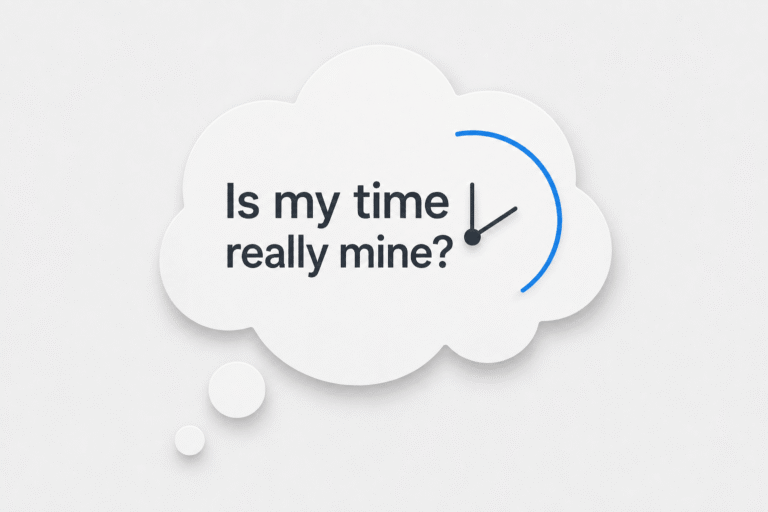
    Who Really Controls My Time?

    Not only time in the practical sense, like schedules, appointments, work hours, and daily routines. I mean time in a deeper sense. The time we actually feel we own. The time we can choose how to use. The time we have with our family, our health, our interests, our growth, and the things that matter to us.

    At some point, I began asking myself a simple but uncomfortable question:

    How much of my time do I really control?

    That question is not meant as criticism toward any job, business, career, or lifestyle. There is no right or wrong answer that fits everyone. Some people love their work. Some people enjoy being employed. Some people enjoy running their own business. Some people want stability. Some people want more freedom. Some people want a combination of both.

    But I think it is still a question worth asking.

    Because many of us grow up inside systems that shape how we think about time, money, work, and security. Often, we do not question those systems because they feel normal. We go to school, we are encouraged to get an education, find a good job, work hard, pay our bills, take vacations when possible, and build a life around that structure.

    There is nothing wrong with that.

    But it may not be the only way to think.

    When I was younger, I mostly saw two ways of earning money. Either you became employed, or you became self-employed. That was the world I understood. If you wanted income, you worked. If you wanted more income, you worked more, became better at what you did, or started your own business.

    I started working early. I had different small jobs when I was young, delivered advertising and newspapers, and later worked in the kitchen and dish area on a passenger boat. I learned very early that money usually came from exchanging time for income.

    Again, there is nothing wrong with that. It is how most of us begin. It is how most of society is structured.

    But later in life, when I was introduced to personal development and new ways of thinking about money, time, and business, I began to see something I had not really understood before.

    There is a difference between earning money from the time we sell and building something that can create income beyond the exact hours we personally work.

    That idea changed how I looked at time.

    As an employee, someone else usually decides many parts of the schedule. When to start. When to finish. When vacation is possible. What needs to be done. Where the work happens. How flexible the day can be.

    As a self-employed person, there may be more freedom in some areas. But even then, time is often connected to customers, assignments, deadlines, projects, and the need to keep producing income. In many cases, it is still an exchange of time for money, just in another form.

    That does not make it bad. It simply means that freedom and income are not always the same thing. A person can earn a good income and still have very little control over their time. A person can own a business and still feel trapped by the demands of that business. A person can have a stable job and still wonder what would happen if something changed outside their control.

    That is one of the reasons I believe this topic matters.

    Life can change quickly. A company can reorganize. A customer can disappear. A market can shift. A political decision can affect an industry. A health issue can change what is possible. An economy can move in a direction no one expected.

    Sometimes things happen that affect our entire lifestyle, even if we did nothing wrong.

    That is why I no longer think only in terms of income. I think more in terms of options.

    Do I have options?

    Do I have a buffer? Do I have more than one way to create income? Do I have skills that can help me adapt? Do I have something I am building for the future? Do I have enough control over my time to live in a way that feels meaningful to me?

    Those questions are not always comfortable, but they can be useful.

    For me, this is not about telling anyone to leave their job, stop running their business, or change everything immediately. That would be too simple, and life is rarely that simple.

    For me, it is more about awareness.

    Maybe the first step is not to change everything. Maybe the first step is simply to notice how life is structured.

    How much of my week is truly chosen by me? How much is controlled by obligations? How much of my income depends on one source? How much of my time goes to things I say are important, but rarely prioritize? How much of my life is built by design, and how much is simply the result of habits, routines, and expectations I never questioned?

    These are important questions because time is not just a practical resource. Time is life.

    Time with family. Time with children. Time for health. Time for learning. Time for reflection. Time for meaningful work. Time for adventure. Time to become the person we want to become.

    Many people say they want more freedom, but freedom is not only about money. Money can help, of course. But freedom is also about having choices. It is about not being completely dependent on one situation, one employer, one customer, one system, or one way of earning income.

    That is why I believe building alternatives can be so valuable.

    An alternative does not have to be dramatic. It can start small.

    It may be learning a new skill. It may be reading and studying personal development. It may be building better financial habits. It may be saving a percentage of income. It may be investing in knowledge. It may be creating a small project on the side. It may be developing a business slowly over time. It may be building something today that creates more choices tomorrow.

    The point is not that everyone should do the same thing.

    The point is to begin thinking differently.

    If I love what I do today, that is wonderful. But I still want it to be a choice, not a trap.

    If I choose to stay in a job, I want that choice to come from clarity, not fear.

    If I choose to run a business, I want to build it in a way that creates more freedom, not less.

    If I choose to spend my time in a certain way, I want to know that it is aligned with the life I am trying to build.

    That, to me, is the real question.

    Not whether employment is good or bad. Not whether business is good or bad. Not whether one path is better than another.

    The real question is: Am I building a life where I have options?

    Because when we have options, we can make better choices. We can stay because we want to, not because we are trapped. We can work because it is meaningful, not only because we have no alternative. We can build slowly without panic. We can think longer term. We can make decisions from a place of strength instead of fear.

    I think that is one of the reasons personal development has meant so much to me. It opened my mind to the idea that life does not have to be viewed only through the structure I grew up with. It helped me understand that habits, thinking, skills, leadership, communication, and financial awareness all play a role in creating more options.

    And maybe that is where the real value begins.

    Not in suddenly changing everything.

    Not in judging anyone else’s choices.

    But in asking better questions.

    What kind of life am I building? Where does my time go? What am I depending on? What would happen if something changed? What could I start building now that might give me more choices later?

    For me, this reflection comes back to one simple idea:

    I want to own more of my time.

    Not because I want to escape responsibility, but because I want to live with more intention. I want my time, work, income, habits, and growth to move in the direction of the life I actually want to build.

    Maybe that is something worth thinking about.

    Because if time is life, then learning to create more choice around our time may be one of the most important forms of growth.

    Related reading: Creating more control over your time often starts with small daily habits. Read: Are Your Habits Changing Your Life?

    Want to understand how your choices shape the way you use your time? Learn more about the Decision Style Test.

    Was this article helpful?
    YesNo
  • |

    Your Best Investment

    We often talk about investments. Investing in stocks. Investing in funds. Investing in property. Investing in a business. Investing in something that may grow over time and hopefully create a better future.

    All of that can be valuable. But I believe there is one investment that comes before many others.

    The investment we make in ourselves.

    Because no matter what we want to build, improve, change, or create, we bring ourselves into it. Our thinking. Our habits. Our knowledge. Our attitude. Our discipline. Our communication. Our ability to handle setbacks. Our ability to learn.

    If those things do not grow, it becomes much harder for anything else to grow.

    A person can invest money without understanding what they are doing. A person can start a business without developing the skills needed to run it. A person can begin a health journey without learning how to build habits that last. A person can set goals without understanding what kind of person they need to become in order to reach them.

    That is why personal development matters.

    For me, investing in myself has been one of the most valuable things I have done. I do not say that because I am finished, or because I have everything figured out. I am not where I want to be in every area of life.

    But I can see clearly that the books I have read, the seminars I have attended, the education I have received, and the personal development I have worked with have shaped how I think, how I act, and how I look at the future.

    It has not made me into someone else. Maybe that is the wrong way to look at growth.

    I do not think personal development turns us into a completely different person. I think it helps bring out more of what is already inside us.

    It is a little like a block of stone. At first, it may look rough, unclear, and unfinished. But as the work continues, something begins to appear. The shape becomes clearer. The unnecessary parts are removed. The sculpture was not created from nothing. It was revealed through the process.

    I think growth can work in a similar way.

    The more we learn, the more we discover about ourselves. The more we develop, the more we notice both our strengths and the areas where we still need to grow. And the more we understand, the more we also realize how much we still do not know.

    That is not a weakness. That is part of the process.

    Investing in ourselves does not always produce an immediate result that can be measured in money. Sometimes the result shows up in our thinking. Sometimes it shows up in our attitude. Sometimes it shows up in how we handle pressure, how we communicate, how we make decisions, or how we respond when life does not go the way we planned.

    That kind of return may be difficult to calculate, but it can still be extremely valuable.

    If we invest in our health, we may gain more energy, confidence, strength, and quality of life. If we invest in our mindset, we may begin to see possibilities where we previously saw only problems. If we invest in communication, we may improve our relationships, our leadership, and our ability to work with other people.

    If we invest in financial education, we may make better decisions with money. If we invest in personal development, we may begin to understand ourselves on a deeper level and create a better direction for our future.

    That is why I believe this kind of investment is so important.

    It is not only about reading a book or attending a seminar. Those things can be powerful, but only if we use them. A book on a shelf does not change much. A course we never apply does not create much growth. A seminar may inspire us, but inspiration alone is not enough.

    The real value comes when we take what we learn and begin to live it.

    That is when information becomes transformation.

    Before choosing where to invest time, money, or energy, I think it helps to ask a few honest questions.

    What do I want to improve? What kind of person do I need to become? What knowledge am I missing? What habits are holding me back? What area of my life would change the most if I became better prepared?

    Those questions matter because self-investment is not only one thing. It can look different depending on what we need.

    For one person, investing in themselves may mean joining a health program, learning how to eat better, move more, and build routines that support a better lifestyle.

    For another person, it may mean taking a course in investing, business, leadership, communication, or personal finance.

    For someone else, it may mean reading books that challenge their thinking, finding a mentor, attending a seminar, or learning a skill that opens new possibilities.

    It may also mean building something on the side while still doing what they do today. If someone wants more options in the future, they may need to invest in the knowledge, habits, and skills required to create those options.

    In many cases, the future we want requires a version of ourselves we have not fully developed yet. That can be uncomfortable, but it can also be encouraging.

    Because it means growth is possible.

    We are not stuck only with what we know today. We can learn. We can improve. We can become more disciplined. We can become better communicators. We can become more aware. We can become stronger in the areas that matter to us.

    But it usually does not happen by accident. It happens because we choose to invest in it.

    I think one mistake many people make is that they look for better results before they look at who they are becoming. They want better finances, better health, better relationships, better confidence, better opportunities, or better leadership.

    But many of those results are connected to personal growth.

    If I want better health, I may need better habits. If I want better finances, I may need better financial understanding. If I want better relationships, I may need better communication. If I want better leadership, I may need better self-awareness. If I want better opportunities, I may need to become better prepared.

    This is why investing in yourself is not selfish. It can actually make you more valuable to others.

    When you grow, you often bring more value to your family, your work, your business, your team, and the people around you. You become better equipped to contribute, support, lead, communicate, and make decisions.

    That is a return that can affect more than just yourself.

    For me, books have played a big role in this. Not every book will change a life. Not every course will be useful. Not every seminar will create a breakthrough. But when the right idea meets the right moment, it can shift the way we see ourselves and our future.

    Sometimes one idea can change how we think. Sometimes one habit can change the direction of a year. Sometimes one decision to grow can open doors that were not visible before.

    That is why I keep coming back to this thought:

    Before investing only in what is outside of us, maybe we should also ask how much we are investing in what is inside of us.

    Our thinking. Our knowledge. Our discipline. Our health. Our communication. Our self-awareness. Our ability to grow.

    Because everything we build is affected by the person we are becoming.

    And if we want a better future, one of the most practical places to start may be with ourselves.

    Related reading: A good investment in yourself often starts with what you read and how you apply it. Read: Are You Reading Books—or Just Owning Them?

    Want to better understand yourself and discover where your greatest opportunities for growth lie? Learn more about the Core Color Personality Test.

    Was this article helpful?
    YesNo
  • The Courage to Be Visible

    Building a website is one thing.

    Putting your thoughts online is another.

    But showing yourself — your face, your voice, your personality — on video is a completely different level of exposure.

    When you see yourself on camera, it’s very easy to become your own harshest critic.

    You notice everything.

    How you speak.
    How you look.
    How you move.
    Whether you sound confident enough.

    I’ve experienced that myself while recording videos for Equipido.

    You watch the video back and think:
    “Could I have said that better?”
    “Do I really look like that?”
    “Should I record it again?”

    But at some point, you have to accept something very simple.

    This is who I am.

    This is how I speak.

    This is how I look.

    And the biggest judge in the room is often not other people.

    It’s ourselves.

    Once you accept that everything doesn’t need to be perfect, something changes. You stop trying to control every small detail and start focusing on the message instead.

    Some people will appreciate it.

    Some people won’t.

    That’s part of being visible.

    But if you wait until everything feels perfect before you share something with the world, you will probably never share anything at all.

    Related reading: Fear and doubt often appear when we choose to be visible and share who we are. Read: Fear and Doubt Are Part of Growth.

    Want to understand how your emotional patterns shape the way you handle vulnerability, fear of judgment, and being seen? Learn more about the Emotional Style Test.

    Was this article helpful?
    YesNo
  • |

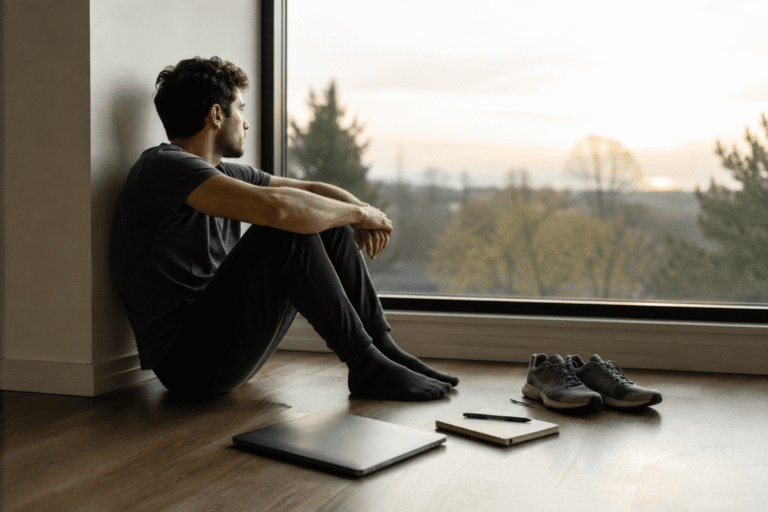
    The Need for Acceptance

    Many people seek acceptance.

    We want to feel that what we do matters, that our ideas are respected, and that we are understood by others.

    In many ways, this is completely natural.

    But the need for acceptance can sometimes influence us more than we realize.

    When we receive criticism — or even something that we interpret as criticism — it can affect our emotional state.

    Sometimes more than it should.

    A simple email, message, or comment can trigger a reaction.

    Even when we rationally understand that people communicate differently and may not intend anything negative, emotions can still respond first.

    I can recognize that in myself.

    Sometimes a comment or message can stay in my thoughts longer than I would like.

    Even when I know logically that it shouldn’t.

    That’s something I actively work on.

    Part of personal growth is learning to recognize our own triggers.

    Why do certain things affect us more than others?

    What experiences or expectations are behind those reactions?

    Different people react differently to the same situation.

    If ten people experience the same event, you will probably see ten different reactions.

    Our backgrounds, personalities, and experiences shape how we interpret the world.

    That’s why there is rarely a universal “right” way to react.

    The important part is learning to understand ourselves better over time.

    Because when we begin to understand our own reactions, we also begin to reduce the power they have over our decisions.

    And that’s where real growth begins.

    Want to understand why feedback or criticism affects you the way it does—and how your response patterns influence your growth? Learn more about the Feedback Style Test.

    Was this article helpful?
    YesNo

Leave a Reply

Your email address will not be published. Required fields are marked *