
·

Your Mental Diet Is Shaping Your Future

Human brain divided between positive growth and negative digital noise, illustrating how your mental diet shapes your future.

Many of us think carefully about our physical health. We consider what we eat, how much we exercise, whether we are getting enough sleep, and what we can do to give our bodies the best possible conditions as we grow older.

But how often do we think about our mental diet?

Yes, you read that correctly: your mental diet.

What are you feeding your mind every day, and how is it affecting the person you are becoming?

Everything You Consume Leaves Something Behind

During an ordinary day, information enters our minds from many different directions. We watch the news, scroll through social media, listen to conversations, read articles, watch videos, and perhaps read books or listen to audiobooks.

Some of that content can give us knowledge, energy, inspiration, and direction. Other content can leave us feeling worried, frustrated, distracted, envious, or negative.

I am not saying that we should avoid reality or ignore everything difficult. Life is not always positive, and we cannot control everything that happens around us. But we can become more aware of what we repeatedly choose to consume and what effect it has on us.

After spending forty minutes scrolling through social media, it may be worth asking yourself: Do I feel better than I did before? Do I feel inspired to take action, or do I feel tired, irritated, dissatisfied, or discouraged?

The answer may tell you something important about your mental diet.

Social Media Shows a Picture, Not the Whole Story

Social media can affect us through conflict, complaints, and negative stories. But it can also affect us through comparison.

We may see someone’s home, relationship, holiday, success, or lifestyle and begin asking why our own life does not look the same. Their life appears happy, effortless, and complete, while ours may feel ordinary or difficult by comparison.

But social media rarely shows the whole picture. It shows selected moments, carefully chosen images, and often only the parts someone wants other people to see. Behind the photograph, reality may look very different.

When we compare our entire life with someone else’s best moments, we may create feelings of envy, inadequacy, or dissatisfaction based on a picture that was never complete in the first place.

At the same time, looking at someone who has achieved something you genuinely want is not necessarily envy. It can become inspiration.

Perhaps you follow someone who travels frequently, has built a successful business, developed a skill you admire, or created part of the life you would like to build. If what you see encourages you to take action towards your own dreams, then it may strengthen rather than diminish you.

The difference is often found in the feeling and response it creates. Does it make you think, “Why do they have that and not me?” Or does it make you think, “If it is possible for them, perhaps I can begin moving towards it too?”

We need to remain open to inspiration while also being critical of the images and stories we accept as the full truth.

Your Feed Learns From Your Choices

I have noticed that social media often gives us more of what we already choose to watch.

If we repeatedly stop for conflict, fear, complaints, or outrage, more of that type of content may gradually appear. But if we actively search for material that educates, challenges, motivates, or inspires us, our feed can begin to change in the opposite direction.

In my own feed, I now often see clips from people such as Jim Rohn and other material connected to personal development, growth, and success. That is still social media, but it does not affect me in the same way as aimless scrolling through negativity.

It gives me ideas, reminders, and new ways of thinking.

In that sense, we are not only consuming our feeds. We are also helping to shape them. Every click, pause, search, and choice teaches the platform what to place in front of us next.

That makes our choices even more important.

What I Have Noticed in Myself

I have been aware of personal development for many years. But knowing something does not mean that we always practise it consistently.

We are human, and sometimes we fall back into old habits.

During the six weeks before writing this blog, I became much more intentional about my own mental diet. Each day, I spent approximately ninety minutes developing myself. Around sixty minutes were spent reading, while the remaining thirty minutes were used to study material that I believe I need in order to change my thinking and move closer to my goals.

During my walks, I also listened to audiobooks and other material connected to the direction in which I want to take my life. This included books such as The Magic of Thinking Big and Psycho-Cybernetics, alongside other personal-development and business material.

At the same time, I spent much less time watching the news and much less time scrolling without a purpose.

The difference I have noticed in myself has been significant. I feel more focused, more positive, and more connected to what I want to achieve. I no longer feel the same need to sit and watch the news. When I use social media, much of what appears is now connected to growth, success, and the subjects I want more of in my life.

I have not become perfect, and I still sometimes fall back into old patterns. But that is also part of being human.

The important thing is to notice it and consciously choose what we want to begin feeding our minds again.

Where Is Your Mental Diet Taking You?

A single video, post, or news story may not change your life. But repeated inputs can gradually influence how you think, feel, and respond to the world around you.

They may affect your mood at work, how patiently you treat your family or partner, how you see your future, and whether you mainly notice opportunities or problems.

The question is therefore not only how something makes you feel today. It is also where that repeated influence may take you in two years or five years.

Is what you consume helping you become more focused, hopeful, disciplined, and connected to your goals? Or is it slowly moving you in the opposite direction?

We cannot control everything that enters our lives. But we can take greater responsibility for what we repeatedly choose to place inside our minds.

For one month, try becoming more intentional about your mental diet. Notice what gives you energy and what drains it. Choose books, audiobooks, podcasts, courses, and people who help you grow. Reduce some of the content that repeatedly leaves you feeling worse without giving you anything useful in return.

Then observe what changes in your thoughts, energy, relationships, work, and direction.

We often ask ourselves what we have eaten today.

Perhaps we should also ask:

What have I fed my mind?


Do your emotional patterns influence what you focus on and how strongly outside information affects you? Explore the Emotional Style Test.

Are your daily choices moving you towards the future you want? Explore the Goal Style Test.

Was this article helpful?
YesNo

Similar Posts

  • |

    What Lies Within

    When people hear the words personal development, they may wonder:

    “Does this mean I need to change who I am?”

    “Am I not already good enough?”

    Personal development does not mean becoming someone else. It does not mean rejecting who you are today or replacing your personality with a different one.

    I see it more like a sculptor working with clay.

    The clay already has substance, character, and potential. The sculptor does not replace it but carefully works with what is already there, gradually bringing its shape forward.

    That is how I see personal development: not creating a new person, but revealing more of the person who is already there.

    Bringing Forward What Is Already Within You

    We all have strengths, abilities, dreams, and qualities that may not yet be fully developed.

    Some may be hidden beneath fear, doubt, old habits, or past experiences. Others simply need attention, practice, and the right tools before they can grow.

    Personal development helps bring these qualities forward.

    It may involve reading, learning new skills, reflecting on our behaviour, or becoming more aware of how we think and respond. It may also involve understanding our personality—our natural strengths, our tendencies, and the patterns that sometimes hold us back.

    This does not mean becoming a different person.

    It means becoming a stronger, wiser, and more conscious version of yourself.

    Growth Still Requires Change

    Personal development does not mean that everything about us should remain exactly as it is.

    We may need to change habits that limit us. We may need to improve how we communicate, respond under pressure, treat other people, or lead ourselves through difficult situations.

    But changing a behaviour is not the same as rejecting who we are.

    Developing discipline—or building better habits, as I prefer to think of it—does not mean you had no value before. Becoming more patient, courageous, or thoughtful does not mean becoming someone else.

    It means continuing to shape what is already there.

    We Are Never Completely Finished

    A sculpture may eventually be considered complete. Human beings are different.

    There is always more we can learn about how we think, act, handle challenges, build relationships, and support the people around us.

    We can develop new skills and rediscover dreams that may have been buried beneath everyday responsibilities.

    Who we are today is not the limit of who we can become.

    Start by Understanding Yourself

    It is difficult to shape something we do not understand.

    Self-awareness gives us a clearer picture of our strengths, our personality, and the patterns that may be holding us back.

    A personality test cannot tell you who you must become. But it may help you understand more clearly who you already are—and where additional potential may be waiting to be developed.

    You are not a problem that needs to be fixed.

    You are a person who can continue to learn, grow, and bring forward more of what already exists within you.

    The clay is already there.

    The question is what you will choose to shape from it.

    Want to understand more about the strengths and natural tendencies you already carry? Explore the Core Color Personality Test.

    Related reading: Personal growth becomes easier when we understand both who we are and the habits that shape us. Read: Understand Yourself First and Are Your Habits Changing Your Life?

    Was this article helpful?
    YesNo
  • |

    It Starts With You

    It is easy to say that we want something different.
    A better career. Better health. More freedom. A stronger business. Personal growth. Whatever success means to us.
    But there is another question that may be more important:
    Are we willing to become the person who can create that result?
    Because wanting something and being willing to do what it requires are not always the same thing.

    When Comfortable Starts to Feel Like Progress

    Sometimes we find something we are good at.
    We understand it. We feel comfortable doing it. Other people recognise us for it. Maybe they ask for our advice, appreciate what we do or even begin to see us as an expert.
    There is absolutely nothing wrong with that.
    But it can also become a very comfortable place to stay.
    Especially when recognition becomes part of the reward.
    When people notice us, appreciate us and make us feel important, it is easy to think:
    This must be where I should focus.
    Maybe it is.

    But there is another question worth asking:

    Is this actually taking me where I say I want to go?
    Those two things are not always the same.
    Something can make us feel successful today without necessarily moving us toward the future we say we want.

    Be Honest About What Is Holding You Back

    This is where being honest with ourselves becomes difficult.
    Sometimes the things we avoid are exactly the things we need to work on.
    Maybe we avoid situations where we might be rejected.
    Maybe we avoid conversations that make us uncomfortable.
    Maybe we stay with the things we already know because starting again would make us feel like a beginner.
    Maybe we enjoy being in an environment where we feel confident and respected, while quietly avoiding another area where we know we need to grow.
    It is much easier to continue doing something that makes us feel good than to look at the parts of ourselves that may be holding us back.
    I know this because I have done it myself.
    There are things I am comfortable doing and things that require much more from me. There are days when I would much rather stay with what I already know than push myself into something uncomfortable.

    But if the uncomfortable part is standing between me and where I want to go, avoiding it does not make it disappear.

    Does Your Goal Match Your Actions?

    There is nothing wrong with changing your goal.
    Maybe what you wanted five years ago is no longer important to you. Maybe your definition of success has changed.
    That is perfectly okay.
    Success does not have to mean money, status or building something huge. For one person it may mean freedom. For another it may mean family, health, contribution, peace of mind or simply having more control over their time.
    But whatever your goal is, I believe we owe it to ourselves to be honest about it.
    If I say I want one result while deliberately avoiding the actions required to create it, there is a gap between what I say and what I do.
    I cannot keep saying I want the destination while refusing to travel the road that leads there.
    At some point I have to make a choice.
    Either change the goal.
    Or start working on the things that are keeping me from it.

    No One Else Can Do That Work for You

    A mentor can help you.
    A leader can guide you.
    A coach can challenge you, teach you and sometimes see things in you that you cannot yet see yourself.
    But they cannot do the work for you.
    And if you are not willing to invest in your own development, why should you expect somebody else to invest more in your future than you do?
    That does not mean you have to have everything figured out.
    It does not mean you cannot be afraid.
    It does not mean you will always feel motivated.
    It simply means being willing to work on yourself — especially the parts that are easier to avoid.
    Because sometimes the biggest obstacle between where we are and where we want to be is not a lack of opportunity.
    It is something within ourselves that we have not been willing to face yet.
    And that is where real growth starts.
    It starts with you.

    Related reading: The Hidden Danger of the Comfort Zone

    Was this article helpful?
    YesNo
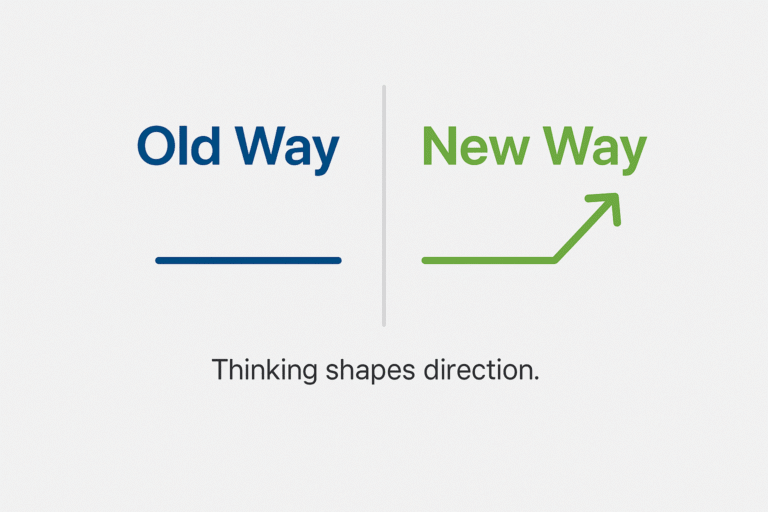
  • How Shifting Your Mind Changes Everything

    Can we think our way to results?
    Both yes and no. Thinking alone doesn’t create change — but changing how you think while moving in the right direction absolutely can.

    Our minds are incredibly powerful, yet often limited by our own patterns. When we open our thinking, we expand what’s possible and begin to notice opportunities we once thought were out of reach.

    We’ve all heard the phrase “You can be anything you want.” I don’t fully agree. If we chase something that goes against our natural strengths, we might become competent — but rarely exceptional.

    Real growth begins when you discover your strengths and build on your natural talents. As leadership expert John C. Maxwell writes, “The key choices you make — apart from the natural talent you already have — will set you apart from others who have talent alone.”
    (From his book Talent Is Never Enough)

    Success isn’t defined by talent alone — it’s shaped by your decisions, character, and mindset.

    So start with your thinking. Expand it, align it, and act on it.
    That’s when possibility becomes progress.

    Want to better understand your natural strengths and how they influence the way you think, decide, and grow? Learn more about Core Color Personality Test.

    Was this article helpful?
    YesNo
  • |

    Your Best Investment

    We often talk about investments. Investing in stocks. Investing in funds. Investing in property. Investing in a business. Investing in something that may grow over time and hopefully create a better future.

    All of that can be valuable. But I believe there is one investment that comes before many others.

    The investment we make in ourselves.

    Because no matter what we want to build, improve, change, or create, we bring ourselves into it. Our thinking. Our habits. Our knowledge. Our attitude. Our discipline. Our communication. Our ability to handle setbacks. Our ability to learn.

    If those things do not grow, it becomes much harder for anything else to grow.

    A person can invest money without understanding what they are doing. A person can start a business without developing the skills needed to run it. A person can begin a health journey without learning how to build habits that last. A person can set goals without understanding what kind of person they need to become in order to reach them.

    That is why personal development matters.

    For me, investing in myself has been one of the most valuable things I have done. I do not say that because I am finished, or because I have everything figured out. I am not where I want to be in every area of life.

    But I can see clearly that the books I have read, the seminars I have attended, the education I have received, and the personal development I have worked with have shaped how I think, how I act, and how I look at the future.

    It has not made me into someone else. Maybe that is the wrong way to look at growth.

    I do not think personal development turns us into a completely different person. I think it helps bring out more of what is already inside us.

    It is a little like a block of stone. At first, it may look rough, unclear, and unfinished. But as the work continues, something begins to appear. The shape becomes clearer. The unnecessary parts are removed. The sculpture was not created from nothing. It was revealed through the process.

    I think growth can work in a similar way.

    The more we learn, the more we discover about ourselves. The more we develop, the more we notice both our strengths and the areas where we still need to grow. And the more we understand, the more we also realize how much we still do not know.

    That is not a weakness. That is part of the process.

    Investing in ourselves does not always produce an immediate result that can be measured in money. Sometimes the result shows up in our thinking. Sometimes it shows up in our attitude. Sometimes it shows up in how we handle pressure, how we communicate, how we make decisions, or how we respond when life does not go the way we planned.

    That kind of return may be difficult to calculate, but it can still be extremely valuable.

    If we invest in our health, we may gain more energy, confidence, strength, and quality of life. If we invest in our mindset, we may begin to see possibilities where we previously saw only problems. If we invest in communication, we may improve our relationships, our leadership, and our ability to work with other people.

    If we invest in financial education, we may make better decisions with money. If we invest in personal development, we may begin to understand ourselves on a deeper level and create a better direction for our future.

    That is why I believe this kind of investment is so important.

    It is not only about reading a book or attending a seminar. Those things can be powerful, but only if we use them. A book on a shelf does not change much. A course we never apply does not create much growth. A seminar may inspire us, but inspiration alone is not enough.

    The real value comes when we take what we learn and begin to live it.

    That is when information becomes transformation.

    Before choosing where to invest time, money, or energy, I think it helps to ask a few honest questions.

    What do I want to improve? What kind of person do I need to become? What knowledge am I missing? What habits are holding me back? What area of my life would change the most if I became better prepared?

    Those questions matter because self-investment is not only one thing. It can look different depending on what we need.

    For one person, investing in themselves may mean joining a health program, learning how to eat better, move more, and build routines that support a better lifestyle.

    For another person, it may mean taking a course in investing, business, leadership, communication, or personal finance.

    For someone else, it may mean reading books that challenge their thinking, finding a mentor, attending a seminar, or learning a skill that opens new possibilities.

    It may also mean building something on the side while still doing what they do today. If someone wants more options in the future, they may need to invest in the knowledge, habits, and skills required to create those options.

    In many cases, the future we want requires a version of ourselves we have not fully developed yet. That can be uncomfortable, but it can also be encouraging.

    Because it means growth is possible.

    We are not stuck only with what we know today. We can learn. We can improve. We can become more disciplined. We can become better communicators. We can become more aware. We can become stronger in the areas that matter to us.

    But it usually does not happen by accident. It happens because we choose to invest in it.

    I think one mistake many people make is that they look for better results before they look at who they are becoming. They want better finances, better health, better relationships, better confidence, better opportunities, or better leadership.

    But many of those results are connected to personal growth.

    If I want better health, I may need better habits. If I want better finances, I may need better financial understanding. If I want better relationships, I may need better communication. If I want better leadership, I may need better self-awareness. If I want better opportunities, I may need to become better prepared.

    This is why investing in yourself is not selfish. It can actually make you more valuable to others.

    When you grow, you often bring more value to your family, your work, your business, your team, and the people around you. You become better equipped to contribute, support, lead, communicate, and make decisions.

    That is a return that can affect more than just yourself.

    For me, books have played a big role in this. Not every book will change a life. Not every course will be useful. Not every seminar will create a breakthrough. But when the right idea meets the right moment, it can shift the way we see ourselves and our future.

    Sometimes one idea can change how we think. Sometimes one habit can change the direction of a year. Sometimes one decision to grow can open doors that were not visible before.

    That is why I keep coming back to this thought:

    Before investing only in what is outside of us, maybe we should also ask how much we are investing in what is inside of us.

    Our thinking. Our knowledge. Our discipline. Our health. Our communication. Our self-awareness. Our ability to grow.

    Because everything we build is affected by the person we are becoming.

    And if we want a better future, one of the most practical places to start may be with ourselves.

    Related reading: A good investment in yourself often starts with what you read and how you apply it. Read: Are You Reading Books—or Just Owning Them?

    Want to better understand yourself and discover where your greatest opportunities for growth lie? Learn more about the Core Color Personality Test.

    Was this article helpful?
    YesNo
  • | |

    Understand Yourself First

    Personal development is often connected to books, habits, discipline, goals, leadership, and taking action. All of those things matter.

    But I believe there is one part that is easy to overlook.

    Understanding yourself.

    Because if we do not understand ourselves, it becomes much harder to understand why we act the way we do, why some habits work for us and others do not, why certain goals motivate us while others create resistance, and why communication with other people sometimes becomes more difficult than it needs to be.

    That is one of the reasons I believe self-awareness is such an important foundation for personal growth.

    We can read a good book. We can listen to great advice. We can set goals. We can decide to change. But if we do not understand ourselves, we may still try to build our life in a way that does not really fit how we are wired.

    This does not mean that personality should become an excuse. It does not mean we should say, “This is just who I am,” and avoid growth.

    It means the opposite.

    When we understand ourselves better, we can grow in a smarter way.

    For example, when we talk about habits, it is easy to think that the same method should work for everyone. Wake up earlier. Follow the same routine. Use the same system. Set the same kind of goals. Measure progress the same way.

    But people are different. Some people are motivated by structure. Some need more flexibility. Some are driven by results. Some need meaning and connection. Some people like detailed plans. Others feel trapped by too many details. Some people move quickly and adjust as they go. Others need time to think before taking action.

    None of this is right or wrong. It is simply different.

    That is why I think personality tests and personality tools can be valuable. Not because they define everything about us, but because they can give us language for things we may already feel but have not clearly understood.

    A good personality tool does not put a person in a box. It helps a person understand the box they may already have been living inside without noticing it.

    When we begin to understand our own personality style, we can start asking better questions.

    Why do I react this way? Why do I avoid certain things? Why do I get energy from some situations and lose energy in others? Why do I communicate well with some people but struggle with others? Why do certain goals inspire me, while other goals feel heavy even when they are important?

    These questions can create real value.

    Because personal growth is not only about pushing harder. Sometimes it is about understanding better.

    If a person sets a goal in a way that does not fit their personality, the goal may be good, but the approach may be wrong. Then they may become frustrated and think they lack discipline, motivation, or willpower.

    But maybe the real issue is not the goal. Maybe the real issue is the system around the goal.

    A person may need more structure. Another person may need more freedom. One person may need accountability. Another may need a clear personal reason. One person may need a detailed plan. Another may need a simple first step.

    The same goal can require different paths depending on the person.

    That is one of the reasons I believe self-awareness can make habits stronger. When we understand ourselves better, we can design habits that have a better chance of lasting.

    We can stop copying everything from someone else and start asking:

    What works for me? What kind of environment helps me? What usually stops me? What gives me energy? What makes me lose focus? What kind of support do I need?

    That is not weakness. That is wisdom.

    The same is true with communication.

    Many conflicts do not happen because people are bad people. They happen because people see things differently, process information differently, make decisions differently, and communicate differently.

    One person may speak directly and think they are being clear. Another person may experience that same directness as pressure.

    One person may need facts and details before making a decision. Another person may want the big picture first.

    One person may want fast action. Another may need time to reflect.

    One person may show care by solving problems. Another may show care by listening.

    When we do not understand these differences, it is easy to misunderstand each other. We may think someone is difficult, uninterested, too slow, too intense, too emotional, too cold, too detailed, or too careless.

    But sometimes they are simply different from us.

    When we understand personality styles, we can become better at meeting people where they are. That can help at work. It can help in leadership. It can help in business. It can help in friendships. It can help in family life. It can even help with children, because a child may not communicate, learn, or respond in the same way as the parent.

    If we only communicate from our own style, we may miss the other person. But if we learn to understand their style, we may find a better way to reach them.

    That does not mean we must change who we are. It means we become more aware of how our message is received.

    For me, that is one of the strongest reasons to learn more about personality. It helps us understand ourselves, but it also helps us understand others.

    And when we understand others better, we often judge less and communicate better.

    Of course, a personality test is not the whole truth about a person. No test can explain everything. People are complex. We have different experiences, values, habits, backgrounds, fears, strengths, and dreams.

    Most of us are also a combination of several styles. We are not only one thing.

    That is important to remember.

    A personality tool should be used as a guide, not as a label. It should open reflection, not close the conversation. It should help us grow, not limit who we can become.

    That is why I think the real value is not only in taking a test. The value comes from what we do with the insight afterward.

    Do we reflect on it? Do we recognize patterns? Do we use it to improve our habits? Do we use it to communicate better? Do we use it to set goals in a way that fits us better? Do we use it to understand other people with more patience?

    That is where the growth begins.

    I also think it can be useful to revisit self-awareness over time. We may not become a completely different person, but we do grow. We go through new experiences. We develop new skills. We become more mature in some areas. We may notice patterns that we did not see before.

    That is why self-awareness is not something we do once and then finish. It is something we return to.

    The more we learn about ourselves, the better equipped we become to build the life we want.

    If we want better habits, it helps to understand what kind of structure supports us. If we want better goals, it helps to understand what truly motivates us. If we want better communication, it helps to understand how we naturally express ourselves and how others may receive it. If we want better relationships, it helps to understand that not everyone thinks, feels, or responds the same way we do. If we want better leadership, it helps to understand both ourselves and the people we lead.

    This is why I believe understanding yourself is not a small thing.

    It is a foundation.

    Because when we understand ourselves, we can build better habits. We can make better decisions. We can communicate with more awareness. We can set goals in a way that fits us better. We can stop fighting parts of ourselves and start working with ourselves instead.

    And when we understand ourselves better, we also become more capable of understanding others.

    That may be one of the most valuable parts of personal growth. Not only becoming better for ourselves, but becoming easier to understand, easier to work with, and better at understanding the people around us.

    So before we only ask what habit we should build, what goal we should set, or what result we want to create, maybe we should also ask:

    Do I understand myself well enough to build this in the right way?

    Because sometimes the next step in growth is not only to do more. Sometimes the next step is to understand more.

    And that understanding can change how we build everything else.

    Want to understand how your natural personality shapes the way you build habits, set goals, communicate, and relate to others? Learn more about Core Color Personality Test.

    Was this article helpful?
    YesNo
  • |

    The Need for Acceptance

    Many people seek acceptance.

    We want to feel that what we do matters, that our ideas are respected, and that we are understood by others.

    In many ways, this is completely natural.

    But the need for acceptance can sometimes influence us more than we realize.

    When we receive criticism — or even something that we interpret as criticism — it can affect our emotional state.

    Sometimes more than it should.

    A simple email, message, or comment can trigger a reaction.

    Even when we rationally understand that people communicate differently and may not intend anything negative, emotions can still respond first.

    I can recognize that in myself.

    Sometimes a comment or message can stay in my thoughts longer than I would like.

    Even when I know logically that it shouldn’t.

    That’s something I actively work on.

    Part of personal growth is learning to recognize our own triggers.

    Why do certain things affect us more than others?

    What experiences or expectations are behind those reactions?

    Different people react differently to the same situation.

    If ten people experience the same event, you will probably see ten different reactions.

    Our backgrounds, personalities, and experiences shape how we interpret the world.

    That’s why there is rarely a universal “right” way to react.

    The important part is learning to understand ourselves better over time.

    Because when we begin to understand our own reactions, we also begin to reduce the power they have over our decisions.

    And that’s where real growth begins.

    Want to understand why feedback or criticism affects you the way it does—and how your response patterns influence your growth? Learn more about the Feedback Style Test.

    Was this article helpful?
    YesNo

Leave a Reply

Your email address will not be published. Required fields are marked *