
·

It Starts With You

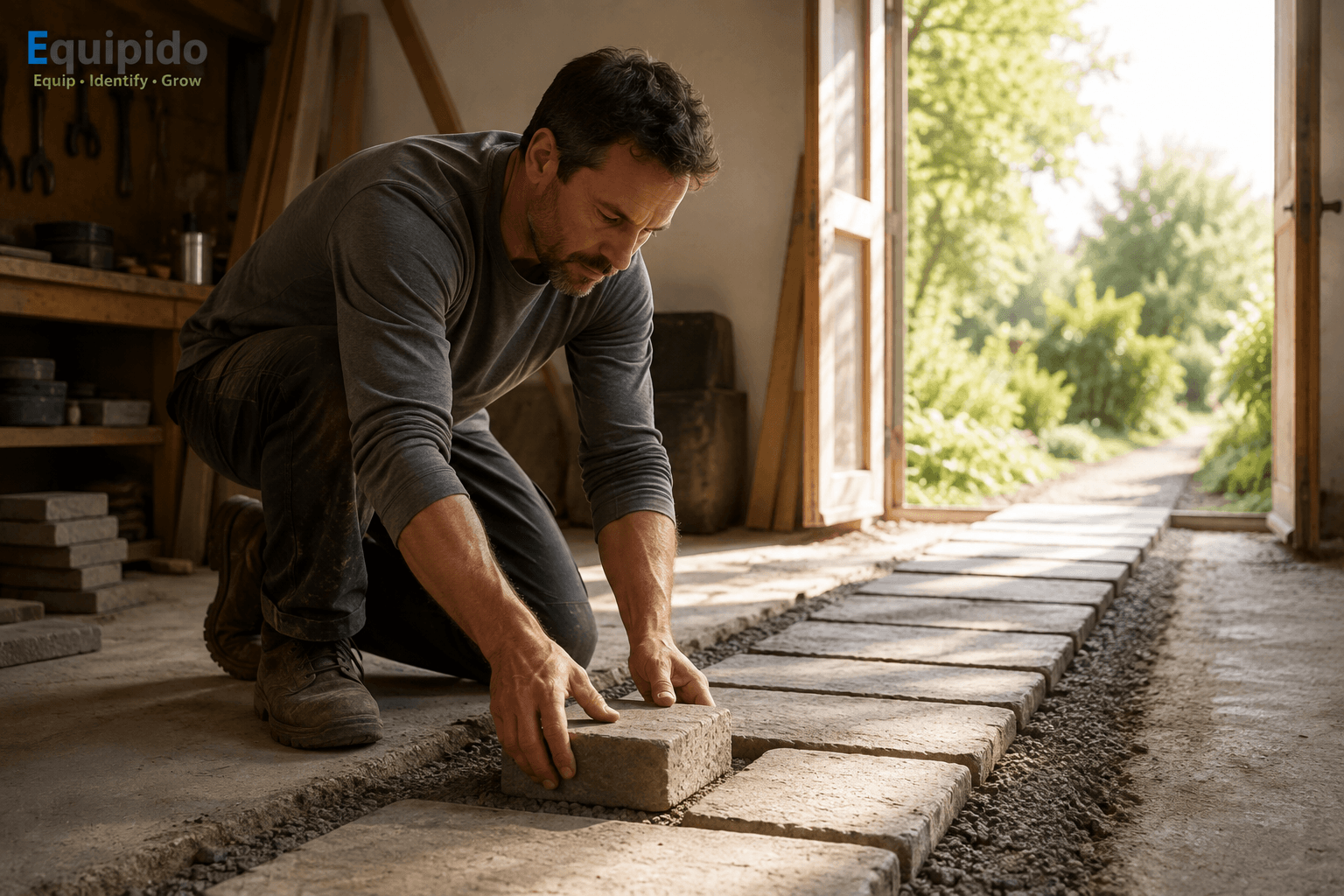
Person building a path forward step by step, symbolizing personal responsibility and taking action toward change.

It is easy to say that we want something different.
A better career. Better health. More freedom. A stronger business. Personal growth. Whatever success means to us.
But there is another question that may be more important:
Are we willing to become the person who can create that result?
Because wanting something and being willing to do what it requires are not always the same thing.

When Comfortable Starts to Feel Like Progress

Sometimes we find something we are good at.
We understand it. We feel comfortable doing it. Other people recognise us for it. Maybe they ask for our advice, appreciate what we do or even begin to see us as an expert.
There is absolutely nothing wrong with that.
But it can also become a very comfortable place to stay.
Especially when recognition becomes part of the reward.
When people notice us, appreciate us and make us feel important, it is easy to think:
This must be where I should focus.
Maybe it is.

But there is another question worth asking:

Is this actually taking me where I say I want to go?
Those two things are not always the same.
Something can make us feel successful today without necessarily moving us toward the future we say we want.

Be Honest About What Is Holding You Back

This is where being honest with ourselves becomes difficult.
Sometimes the things we avoid are exactly the things we need to work on.
Maybe we avoid situations where we might be rejected.
Maybe we avoid conversations that make us uncomfortable.
Maybe we stay with the things we already know because starting again would make us feel like a beginner.
Maybe we enjoy being in an environment where we feel confident and respected, while quietly avoiding another area where we know we need to grow.
It is much easier to continue doing something that makes us feel good than to look at the parts of ourselves that may be holding us back.
I know this because I have done it myself.
There are things I am comfortable doing and things that require much more from me. There are days when I would much rather stay with what I already know than push myself into something uncomfortable.

But if the uncomfortable part is standing between me and where I want to go, avoiding it does not make it disappear.

Does Your Goal Match Your Actions?

There is nothing wrong with changing your goal.
Maybe what you wanted five years ago is no longer important to you. Maybe your definition of success has changed.
That is perfectly okay.
Success does not have to mean money, status or building something huge. For one person it may mean freedom. For another it may mean family, health, contribution, peace of mind or simply having more control over their time.
But whatever your goal is, I believe we owe it to ourselves to be honest about it.
If I say I want one result while deliberately avoiding the actions required to create it, there is a gap between what I say and what I do.
I cannot keep saying I want the destination while refusing to travel the road that leads there.
At some point I have to make a choice.
Either change the goal.
Or start working on the things that are keeping me from it.

No One Else Can Do That Work for You

A mentor can help you.
A leader can guide you.
A coach can challenge you, teach you and sometimes see things in you that you cannot yet see yourself.
But they cannot do the work for you.
And if you are not willing to invest in your own development, why should you expect somebody else to invest more in your future than you do?
That does not mean you have to have everything figured out.
It does not mean you cannot be afraid.
It does not mean you will always feel motivated.
It simply means being willing to work on yourself — especially the parts that are easier to avoid.
Because sometimes the biggest obstacle between where we are and where we want to be is not a lack of opportunity.
It is something within ourselves that we have not been willing to face yet.
And that is where real growth starts.
It starts with you.

Related reading: The Hidden Danger of the Comfort Zone

Was this article helpful?
YesNo

Similar Posts

  • Fear and Doubt Are Part of Growth

    When you build something and put it out into the world, you expose yourself.

    It doesn’t matter if it’s a business, a blog, a video, or simply sharing your thoughts publicly. The moment you make something visible, you also open yourself up to opinions, reactions, and judgment.

    And that can create doubt.

    I’ve experienced that many times while building Equipido. Even when you know you have something valuable to share — years of experience, education, and reflection behind it — there can still be that quiet voice asking:

    How will people react?
    What will they think?

    Those thoughts are natural. They are part of being human.

    But the deeper truth is that fear and doubt often come from something much older and deeper. Many times they are connected to acceptance — the desire to be understood, appreciated, or simply not rejected.

    The problem is that if fear and doubt begin to control our decisions, they can quietly hold us back.

    Whether we want to start a business, create something meaningful, or grow as individuals, there will always be uncertainty. Waiting until everything feels comfortable or safe usually means waiting forever.

    Growth almost always requires doing something that feels uncomfortable.

    And the reality is simple: if we only stay in situations that feel safe, predictable, and comfortable, we rarely move forward.

    Progress happens when we step into situations where we don’t have full control, where we might be judged, and where things might not turn out exactly as planned.

    That doesn’t mean fear disappears.

    It simply means we choose to move forward anyway.

    Related reading: Being visible often brings fear and doubt. Read: The Courage to Be Visible.

    Want to understand how your emotional patterns shape the way you respond to fear, doubt, and uncertainty as you grow? Learn more about the Emotional Style Test.

    Was this article helpful?
    YesNo
  • |

    The Mental Prison

    Sometimes we are held back by something we are not even aware of. A mental prison.

    We grow up surrounded by other people’s values, beliefs, and ways of looking at life. We learn from our parents, the people around us, and later from school and work. Much of that becomes so familiar that we never really question it.

    We learn how things are supposed to be. How we are supposed to fit in. What we are supposed to do. And often, we follow that path without knowing what other paths might exist.

    Get an education. Find a good, secure job. That was the direction I learned.

    There is nothing wrong with that. If you enjoy your work and the life you are building, then you should do what feels right for you. But I think there is a difference between choosing a path and following it because it is the only one you know.

    The people around us may have followed the same path themselves. They passed on what they knew. They may never have been introduced to anything different either.

    When I was at school, I did not learn how to make money work for me. I did not learn that from my parents either. I understood working for money. Exchanging my time for an income. But financial understanding beyond that was something I had to begin learning for myself.

    The knowledge simply was not there in the environment I grew up in. And when we do not know that other possibilities exist, it is difficult to see them as choices.

    I think the way we learn to look at mistakes can become part of this too. At school, getting an answer wrong was something negative. But in life, mistakes can be part of how we learn.

    When I listen to people who have built something significant, I often hear them talk about how many things went wrong along the way. They made mistakes. They tried things that did not work.

    That is a very different picture from the idea that getting something wrong means you have failed. If we carry that fear of being wrong with us, it can become another part of the mental prison.

    For me, the beginning is curiosity. Being willing to ask whether there might be something beyond the way we have always done things. If you are reading blogs like this, perhaps you have already started that journey.

    We can read. We can listen. We can learn from people who have done something we would like to do. There is material about financial understanding, emotional intelligence, personal development, and leadership. There are books and podcasts that can introduce us to ideas we were never taught.

    Those were not things I remember learning at school. I had to look for them myself.

    I have also thought about the education we receive through work. In the jobs I have had, I have not felt that the purpose was to help me build the life I wanted or understand how to create something of my own. The education was connected to what the company needed.

    We may be sent on a course or given an opportunity to travel somewhere for training. That can feel good. We feel that someone is investing in us. But I think it is worth understanding why that investment is being made.

    From my experience, the company expects it to benefit the business. That is how I have understood it. Others may have had different experiences.

    But for me, it meant that I could not expect my workplace to take responsibility for all the things I needed to learn for my own future.

    When we begin learning about other possibilities, something changes. We have more to base our decisions on.

    We may still choose the work we already do. We may want the security of a regular job. We may decide to build something of our own or explore another direction. But now we know there are alternatives. That is what matters to me.

    I am not saying that one way of living is right for everyone. If you enjoy what you do, keep doing it. But I want that decision to be made on my own terms, with an understanding of what else might be possible.

    Because when we can see beyond the path we grew up with, we can begin making a choice that is truly our own.

    Related reading: Becoming aware of the paths we have learned to follow can also change how we think about work, time, and freedom. Read: Who Really Controls My Time?

    Was this article helpful?
    YesNo
  • |

    A Good Income Is Not the Same as Freedom

    A person can earn a good income and still have very little control over their time. A person can own a business and still feel tied to customers, assignments, and the need to keep producing income.

    That is something I have been thinking about. Because earning money and having freedom are not always the same thing.

    When I was younger, I mostly saw two ways of earning money. You became employed or you became self-employed. If you wanted income, you worked. If you wanted more, you worked more, became better at what you did, or started your own business.

    Later, I began to understand the difference between earning money from the time we sell and building something that can create income beyond the exact hours we personally work.

    That changed how I looked at time.

    As an employee, someone else usually decides many parts of your schedule. As a self-employed person, you may have more freedom in some areas. But customers, deadlines, and assignments can still decide much of your day.

    There is nothing wrong with either path. But owning a business does not automatically mean owning more of your time.

    For me, the question has become less about income alone and more about options.

    Do I have enough control over my time to live in a way that feels meaningful to me? What am I depending on? What would happen if that situation changed?

    Time is not only something we use to work. It is time with family, time for health, time for learning, and time for the things we want to experience in life.

    I may enjoy what I do and still want more choice around those things.

    This does not mean leaving a job or changing everything immediately. An alternative can begin with learning a skill, developing better financial habits, or slowly building a project alongside what we already do.

    The point is not that everyone should do the same thing. The point is to consider what might give us more choices in the future.

    If I enjoy my job, I want to stay because I want to. If I run a business, I want to understand whether it is giving me the freedom I hoped for.

    For me, a good income can be valuable. But I also want time to live the life I am working to build.

    Related reading: Creating more options can begin with investing in your own knowledge and skills. Read: Your Best Investment

    Was this article helpful?
    YesNo
  • The Hidden Danger of the Comfort Zone

    Comfort zones feel safe.

    They are familiar. Predictable. Controlled.

    But comfort zones can also quietly become one of the biggest obstacles to personal growth.

    When we stay in what feels comfortable, we rarely challenge ourselves. We repeat the same patterns, make the same decisions, and surround ourselves with the same environments.

    Nothing feels difficult — but nothing truly changes either.

    Growth almost always requires stepping into situations that feel unfamiliar or uncomfortable.

    That might mean speaking in front of people, sharing your ideas publicly, starting something new, or putting yourself in situations where you know others might disagree with you.

    Those moments can feel uncomfortable because they remove the protection of certainty.

    But discomfort is often a signal that something important is happening.

    It means we are stretching beyond our current limits.

    The comfort zone is not dangerous because it feels bad.

    It’s dangerous because it feels good enough to keep us there.

    And if we stay there too long, we slowly stop moving forward.

    Related reading: Fear and doubt often appear when we step outside our comfort zone. Read: Fear and Doubt Are Part of Growth

    Want to understand how your decision patterns influence whether you stay with what feels safe or move toward change? Learn more about the Decision Style Test.

    Was this article helpful?
    YesNo
  • |

    Does It Inspire You—or Make You Feel Behind?

    Sometimes we see someone else’s home, holiday, business, or lifestyle and begin wondering why our own life does not look like that.

    Their life appears happy and complete. Our own may feel ordinary by comparison.

    But what are we actually comparing?

    Social media shows selected moments. We see the photographs and the parts someone chooses to share. We do not necessarily see what life looks like outside those moments.

    When we compare our entire life with someone else’s best moments, we can begin feeling dissatisfied with our own situation based on a picture that was never complete.

    I think that is something we need to remember when we look at other people’s lives. The image may show something real, but it does not show everything.

    At the same time, looking at someone who has achieved something we want is not necessarily a bad thing.

    Perhaps they have built a business, developed a skill, or created the opportunity to travel more. Perhaps something about their life helps us see a possibility for our own.

    That can become inspiration.

    The difference is often in the feeling it creates and what we do afterward. Do I look at it and think, “Why do they have that and not me?” Or do I think, “If it is possible for them, perhaps I can begin moving towards it too?”

    Those thoughts can take us in different directions.

    I do not think we need to stop looking at what others are doing. But I think it helps to notice how it affects us.

    After spending time scrolling, do I feel inspired to take action? Have I seen something useful? Or do I mainly feel dissatisfied with my own life?

    For me, material connected to personal development and growth can give me ideas, reminders, and new ways of thinking. That is very different from scrolling and finishing with a feeling that my own life is not enough.

    We can be open to inspiration and still question the picture we are seeing.

    If something encourages us to work toward our own dreams, it may be valuable. But if we keep comparing our whole life with a few selected moments from someone else’s, it is worth noticing what that comparison is doing to us.

    Related reading: The things we repeatedly watch, read, and listen to can influence how we see our own lives. Read: Your Mental Diet Is Shaping Your Future

    Was this article helpful?
    YesNo
  • |

    The Need for Acceptance

    Many people seek acceptance.

    We want to feel that what we do matters, that our ideas are respected, and that we are understood by others.

    In many ways, this is completely natural.

    But the need for acceptance can sometimes influence us more than we realize.

    When we receive criticism — or even something that we interpret as criticism — it can affect our emotional state.

    Sometimes more than it should.

    A simple email, message, or comment can trigger a reaction.

    Even when we rationally understand that people communicate differently and may not intend anything negative, emotions can still respond first.

    I can recognize that in myself.

    Sometimes a comment or message can stay in my thoughts longer than I would like.

    Even when I know logically that it shouldn’t.

    That’s something I actively work on.

    Part of personal growth is learning to recognize our own triggers.

    Why do certain things affect us more than others?

    What experiences or expectations are behind those reactions?

    Different people react differently to the same situation.

    If ten people experience the same event, you will probably see ten different reactions.

    Our backgrounds, personalities, and experiences shape how we interpret the world.

    That’s why there is rarely a universal “right” way to react.

    The important part is learning to understand ourselves better over time.

    Because when we begin to understand our own reactions, we also begin to reduce the power they have over our decisions.

    And that’s where real growth begins.

    Want to understand why feedback or criticism affects you the way it does—and how your response patterns influence your growth? Learn more about the Feedback Style Test.

    Was this article helpful?
    YesNo

Leave a Reply

Your email address will not be published. Required fields are marked *