
·

Your Best Investment

People attending a seminar with a speaker on stage, symbolizing learning, personal growth, and investing in yourself.

We often talk about investments. Investing in stocks. Investing in funds. Investing in property. Investing in a business. Investing in something that may grow over time and hopefully create a better future.

All of that can be valuable. But I believe there is one investment that comes before many others.

The investment we make in ourselves.

Because no matter what we want to build, improve, change, or create, we bring ourselves into it. Our thinking. Our habits. Our knowledge. Our attitude. Our discipline. Our communication. Our ability to handle setbacks. Our ability to learn.

If those things do not grow, it becomes much harder for anything else to grow.

A person can invest money without understanding what they are doing. A person can start a business without developing the skills needed to run it. A person can begin a health journey without learning how to build habits that last. A person can set goals without understanding what kind of person they need to become in order to reach them.

That is why personal development matters.

For me, investing in myself has been one of the most valuable things I have done. I do not say that because I am finished, or because I have everything figured out. I am not where I want to be in every area of life.

But I can see clearly that the books I have read, the seminars I have attended, the education I have received, and the personal development I have worked with have shaped how I think, how I act, and how I look at the future.

It has not made me into someone else. Maybe that is the wrong way to look at growth.

I do not think personal development turns us into a completely different person. I think it helps bring out more of what is already inside us.

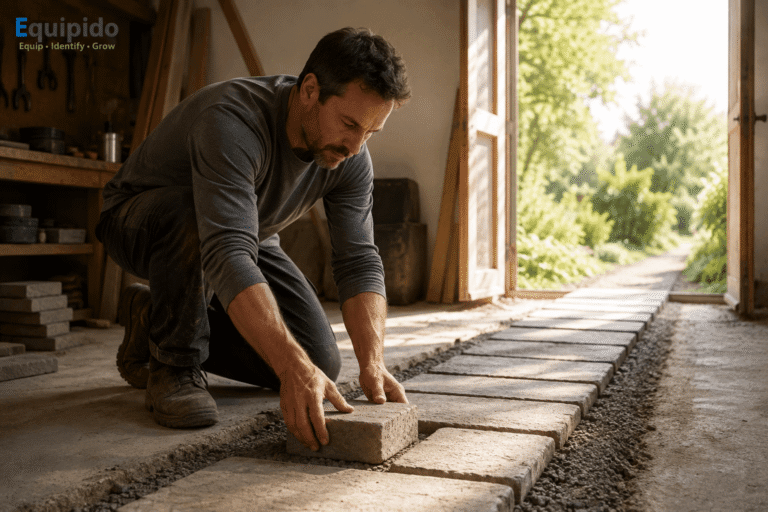
It is a little like a block of stone. At first, it may look rough, unclear, and unfinished. But as the work continues, something begins to appear. The shape becomes clearer. The unnecessary parts are removed. The sculpture was not created from nothing. It was revealed through the process.

I think growth can work in a similar way.

The more we learn, the more we discover about ourselves. The more we develop, the more we notice both our strengths and the areas where we still need to grow. And the more we understand, the more we also realize how much we still do not know.

That is not a weakness. That is part of the process.

Investing in ourselves does not always produce an immediate result that can be measured in money. Sometimes the result shows up in our thinking. Sometimes it shows up in our attitude. Sometimes it shows up in how we handle pressure, how we communicate, how we make decisions, or how we respond when life does not go the way we planned.

That kind of return may be difficult to calculate, but it can still be extremely valuable.

If we invest in our health, we may gain more energy, confidence, strength, and quality of life. If we invest in our mindset, we may begin to see possibilities where we previously saw only problems. If we invest in communication, we may improve our relationships, our leadership, and our ability to work with other people.

If we invest in financial education, we may make better decisions with money. If we invest in personal development, we may begin to understand ourselves on a deeper level and create a better direction for our future.

That is why I believe this kind of investment is so important.

It is not only about reading a book or attending a seminar. Those things can be powerful, but only if we use them. A book on a shelf does not change much. A course we never apply does not create much growth. A seminar may inspire us, but inspiration alone is not enough.

The real value comes when we take what we learn and begin to live it.

That is when information becomes transformation.

Before choosing where to invest time, money, or energy, I think it helps to ask a few honest questions.

What do I want to improve? What kind of person do I need to become? What knowledge am I missing? What habits are holding me back? What area of my life would change the most if I became better prepared?

Those questions matter because self-investment is not only one thing. It can look different depending on what we need.

For one person, investing in themselves may mean joining a health program, learning how to eat better, move more, and build routines that support a better lifestyle.

For another person, it may mean taking a course in investing, business, leadership, communication, or personal finance.

For someone else, it may mean reading books that challenge their thinking, finding a mentor, attending a seminar, or learning a skill that opens new possibilities.

It may also mean building something on the side while still doing what they do today. If someone wants more options in the future, they may need to invest in the knowledge, habits, and skills required to create those options.

In many cases, the future we want requires a version of ourselves we have not fully developed yet. That can be uncomfortable, but it can also be encouraging.

Because it means growth is possible.

We are not stuck only with what we know today. We can learn. We can improve. We can become more disciplined. We can become better communicators. We can become more aware. We can become stronger in the areas that matter to us.

But it usually does not happen by accident. It happens because we choose to invest in it.

I think one mistake many people make is that they look for better results before they look at who they are becoming. They want better finances, better health, better relationships, better confidence, better opportunities, or better leadership.

But many of those results are connected to personal growth.

If I want better health, I may need better habits. If I want better finances, I may need better financial understanding. If I want better relationships, I may need better communication. If I want better leadership, I may need better self-awareness. If I want better opportunities, I may need to become better prepared.

This is why investing in yourself is not selfish. It can actually make you more valuable to others.

When you grow, you often bring more value to your family, your work, your business, your team, and the people around you. You become better equipped to contribute, support, lead, communicate, and make decisions.

That is a return that can affect more than just yourself.

For me, books have played a big role in this. Not every book will change a life. Not every course will be useful. Not every seminar will create a breakthrough. But when the right idea meets the right moment, it can shift the way we see ourselves and our future.

Sometimes one idea can change how we think. Sometimes one habit can change the direction of a year. Sometimes one decision to grow can open doors that were not visible before.

That is why I keep coming back to this thought:

Before investing only in what is outside of us, maybe we should also ask how much we are investing in what is inside of us.

Our thinking. Our knowledge. Our discipline. Our health. Our communication. Our self-awareness. Our ability to grow.

Because everything we build is affected by the person we are becoming.

And if we want a better future, one of the most practical places to start may be with ourselves.

Related reading: A good investment in yourself often starts with what you read and how you apply it. Read: Are You Reading Books—or Just Owning Them?

Want to better understand yourself and discover where your greatest opportunities for growth lie? Learn more about the Core Color Personality Test.

Was this article helpful?
YesNo

Similar Posts

  • The Hidden Danger of the Comfort Zone

    Comfort zones feel safe.

    They are familiar. Predictable. Controlled.

    But comfort zones can also quietly become one of the biggest obstacles to personal growth.

    When we stay in what feels comfortable, we rarely challenge ourselves. We repeat the same patterns, make the same decisions, and surround ourselves with the same environments.

    Nothing feels difficult — but nothing truly changes either.

    Growth almost always requires stepping into situations that feel unfamiliar or uncomfortable.

    That might mean speaking in front of people, sharing your ideas publicly, starting something new, or putting yourself in situations where you know others might disagree with you.

    Those moments can feel uncomfortable because they remove the protection of certainty.

    But discomfort is often a signal that something important is happening.

    It means we are stretching beyond our current limits.

    The comfort zone is not dangerous because it feels bad.

    It’s dangerous because it feels good enough to keep us there.

    And if we stay there too long, we slowly stop moving forward.

    Related reading: Fear and doubt often appear when we step outside our comfort zone. Read: Fear and Doubt Are Part of Growth

    Want to understand how your decision patterns influence whether you stay with what feels safe or move toward change? Learn more about the Decision Style Test.

    Was this article helpful?
    YesNo
  • The Courage to Be Visible

    Building a website is one thing.

    Putting your thoughts online is another.

    But showing yourself — your face, your voice, your personality — on video is a completely different level of exposure.

    When you see yourself on camera, it’s very easy to become your own harshest critic.

    You notice everything.

    How you speak.
    How you look.
    How you move.
    Whether you sound confident enough.

    I’ve experienced that myself while recording videos for Equipido.

    You watch the video back and think:
    “Could I have said that better?”
    “Do I really look like that?”
    “Should I record it again?”

    But at some point, you have to accept something very simple.

    This is who I am.

    This is how I speak.

    This is how I look.

    And the biggest judge in the room is often not other people.

    It’s ourselves.

    Once you accept that everything doesn’t need to be perfect, something changes. You stop trying to control every small detail and start focusing on the message instead.

    Some people will appreciate it.

    Some people won’t.

    That’s part of being visible.

    But if you wait until everything feels perfect before you share something with the world, you will probably never share anything at all.

    Related reading: Fear and doubt often appear when we choose to be visible and share who we are. Read: Fear and Doubt Are Part of Growth.

    Want to understand how your emotional patterns shape the way you handle vulnerability, fear of judgment, and being seen? Learn more about the Emotional Style Test.

    Was this article helpful?
    YesNo
  • |

    It Starts With You

    It is easy to say that we want something different.
    A better career. Better health. More freedom. A stronger business. Personal growth. Whatever success means to us.
    But there is another question that may be more important:
    Are we willing to become the person who can create that result?
    Because wanting something and being willing to do what it requires are not always the same thing.

    When Comfortable Starts to Feel Like Progress

    Sometimes we find something we are good at.
    We understand it. We feel comfortable doing it. Other people recognise us for it. Maybe they ask for our advice, appreciate what we do or even begin to see us as an expert.
    There is absolutely nothing wrong with that.
    But it can also become a very comfortable place to stay.
    Especially when recognition becomes part of the reward.
    When people notice us, appreciate us and make us feel important, it is easy to think:
    This must be where I should focus.
    Maybe it is.

    But there is another question worth asking:

    Is this actually taking me where I say I want to go?
    Those two things are not always the same.
    Something can make us feel successful today without necessarily moving us toward the future we say we want.

    Be Honest About What Is Holding You Back

    This is where being honest with ourselves becomes difficult.
    Sometimes the things we avoid are exactly the things we need to work on.
    Maybe we avoid situations where we might be rejected.
    Maybe we avoid conversations that make us uncomfortable.
    Maybe we stay with the things we already know because starting again would make us feel like a beginner.
    Maybe we enjoy being in an environment where we feel confident and respected, while quietly avoiding another area where we know we need to grow.
    It is much easier to continue doing something that makes us feel good than to look at the parts of ourselves that may be holding us back.
    I know this because I have done it myself.
    There are things I am comfortable doing and things that require much more from me. There are days when I would much rather stay with what I already know than push myself into something uncomfortable.

    But if the uncomfortable part is standing between me and where I want to go, avoiding it does not make it disappear.

    Does Your Goal Match Your Actions?

    There is nothing wrong with changing your goal.
    Maybe what you wanted five years ago is no longer important to you. Maybe your definition of success has changed.
    That is perfectly okay.
    Success does not have to mean money, status or building something huge. For one person it may mean freedom. For another it may mean family, health, contribution, peace of mind or simply having more control over their time.
    But whatever your goal is, I believe we owe it to ourselves to be honest about it.
    If I say I want one result while deliberately avoiding the actions required to create it, there is a gap between what I say and what I do.
    I cannot keep saying I want the destination while refusing to travel the road that leads there.
    At some point I have to make a choice.
    Either change the goal.
    Or start working on the things that are keeping me from it.

    No One Else Can Do That Work for You

    A mentor can help you.
    A leader can guide you.
    A coach can challenge you, teach you and sometimes see things in you that you cannot yet see yourself.
    But they cannot do the work for you.
    And if you are not willing to invest in your own development, why should you expect somebody else to invest more in your future than you do?
    That does not mean you have to have everything figured out.
    It does not mean you cannot be afraid.
    It does not mean you will always feel motivated.
    It simply means being willing to work on yourself — especially the parts that are easier to avoid.
    Because sometimes the biggest obstacle between where we are and where we want to be is not a lack of opportunity.
    It is something within ourselves that we have not been willing to face yet.
    And that is where real growth starts.
    It starts with you.

    Related reading: The Hidden Danger of the Comfort Zone

    Was this article helpful?
    YesNo
  • |

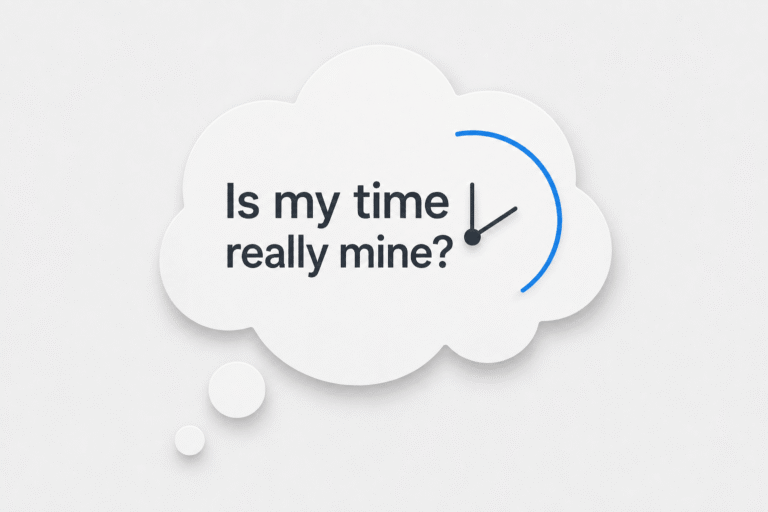
    Who Really Controls My Time?

    Not only time in the practical sense, like schedules, appointments, work hours, and daily routines. I mean time in a deeper sense. The time we actually feel we own. The time we can choose how to use. The time we have with our family, our health, our interests, our growth, and the things that matter to us.

    At some point, I began asking myself a simple but uncomfortable question:

    How much of my time do I really control?

    That question is not meant as criticism toward any job, business, career, or lifestyle. There is no right or wrong answer that fits everyone. Some people love their work. Some people enjoy being employed. Some people enjoy running their own business. Some people want stability. Some people want more freedom. Some people want a combination of both.

    But I think it is still a question worth asking.

    Because many of us grow up inside systems that shape how we think about time, money, work, and security. Often, we do not question those systems because they feel normal. We go to school, we are encouraged to get an education, find a good job, work hard, pay our bills, take vacations when possible, and build a life around that structure.

    There is nothing wrong with that.

    But it may not be the only way to think.

    When I was younger, I mostly saw two ways of earning money. Either you became employed, or you became self-employed. That was the world I understood. If you wanted income, you worked. If you wanted more income, you worked more, became better at what you did, or started your own business.

    I started working early. I had different small jobs when I was young, delivered advertising and newspapers, and later worked in the kitchen and dish area on a passenger boat. I learned very early that money usually came from exchanging time for income.

    Again, there is nothing wrong with that. It is how most of us begin. It is how most of society is structured.

    But later in life, when I was introduced to personal development and new ways of thinking about money, time, and business, I began to see something I had not really understood before.

    There is a difference between earning money from the time we sell and building something that can create income beyond the exact hours we personally work.

    That idea changed how I looked at time.

    As an employee, someone else usually decides many parts of the schedule. When to start. When to finish. When vacation is possible. What needs to be done. Where the work happens. How flexible the day can be.

    As a self-employed person, there may be more freedom in some areas. But even then, time is often connected to customers, assignments, deadlines, projects, and the need to keep producing income. In many cases, it is still an exchange of time for money, just in another form.

    That does not make it bad. It simply means that freedom and income are not always the same thing. A person can earn a good income and still have very little control over their time. A person can own a business and still feel trapped by the demands of that business. A person can have a stable job and still wonder what would happen if something changed outside their control.

    That is one of the reasons I believe this topic matters.

    Life can change quickly. A company can reorganize. A customer can disappear. A market can shift. A political decision can affect an industry. A health issue can change what is possible. An economy can move in a direction no one expected.

    Sometimes things happen that affect our entire lifestyle, even if we did nothing wrong.

    That is why I no longer think only in terms of income. I think more in terms of options.

    Do I have options?

    Do I have a buffer? Do I have more than one way to create income? Do I have skills that can help me adapt? Do I have something I am building for the future? Do I have enough control over my time to live in a way that feels meaningful to me?

    Those questions are not always comfortable, but they can be useful.

    For me, this is not about telling anyone to leave their job, stop running their business, or change everything immediately. That would be too simple, and life is rarely that simple.

    For me, it is more about awareness.

    Maybe the first step is not to change everything. Maybe the first step is simply to notice how life is structured.

    How much of my week is truly chosen by me? How much is controlled by obligations? How much of my income depends on one source? How much of my time goes to things I say are important, but rarely prioritize? How much of my life is built by design, and how much is simply the result of habits, routines, and expectations I never questioned?

    These are important questions because time is not just a practical resource. Time is life.

    Time with family. Time with children. Time for health. Time for learning. Time for reflection. Time for meaningful work. Time for adventure. Time to become the person we want to become.

    Many people say they want more freedom, but freedom is not only about money. Money can help, of course. But freedom is also about having choices. It is about not being completely dependent on one situation, one employer, one customer, one system, or one way of earning income.

    That is why I believe building alternatives can be so valuable.

    An alternative does not have to be dramatic. It can start small.

    It may be learning a new skill. It may be reading and studying personal development. It may be building better financial habits. It may be saving a percentage of income. It may be investing in knowledge. It may be creating a small project on the side. It may be developing a business slowly over time. It may be building something today that creates more choices tomorrow.

    The point is not that everyone should do the same thing.

    The point is to begin thinking differently.

    If I love what I do today, that is wonderful. But I still want it to be a choice, not a trap.

    If I choose to stay in a job, I want that choice to come from clarity, not fear.

    If I choose to run a business, I want to build it in a way that creates more freedom, not less.

    If I choose to spend my time in a certain way, I want to know that it is aligned with the life I am trying to build.

    That, to me, is the real question.

    Not whether employment is good or bad. Not whether business is good or bad. Not whether one path is better than another.

    The real question is: Am I building a life where I have options?

    Because when we have options, we can make better choices. We can stay because we want to, not because we are trapped. We can work because it is meaningful, not only because we have no alternative. We can build slowly without panic. We can think longer term. We can make decisions from a place of strength instead of fear.

    I think that is one of the reasons personal development has meant so much to me. It opened my mind to the idea that life does not have to be viewed only through the structure I grew up with. It helped me understand that habits, thinking, skills, leadership, communication, and financial awareness all play a role in creating more options.

    And maybe that is where the real value begins.

    Not in suddenly changing everything.

    Not in judging anyone else’s choices.

    But in asking better questions.

    What kind of life am I building? Where does my time go? What am I depending on? What would happen if something changed? What could I start building now that might give me more choices later?

    For me, this reflection comes back to one simple idea:

    I want to own more of my time.

    Not because I want to escape responsibility, but because I want to live with more intention. I want my time, work, income, habits, and growth to move in the direction of the life I actually want to build.

    Maybe that is something worth thinking about.

    Because if time is life, then learning to create more choice around our time may be one of the most important forms of growth.

    Related reading: Creating more control over your time often starts with small daily habits. Read: Are Your Habits Changing Your Life?

    Want to understand how your choices shape the way you use your time? Learn more about the Decision Style Test.

    Was this article helpful?
    YesNo
  • Discipline Is Not What Most People Think

    The word discipline often has a negative tone.

    For many people it sounds like something rigid, strict, and monotonous — waking up early every day, following strict routines, and forcing yourself to do things you don’t want to do.

    But discipline doesn’t always look like that.

    While building Equipido, I’ve probably spent more than 2,500 hours working on the platform.

    Yet I’ve never really experienced it as discipline in the traditional sense.

    I didn’t wake up every morning thinking, I must force myself to do this.

    Instead, I had something driving me forward.

    A purpose.

    A goal.

    I wanted to create something that could genuinely help people understand themselves better and grow from that understanding.

    When you have that kind of purpose, long hours don’t always feel like discipline.

    They feel like progress.

    There were periods where I could wake up very early, work long days, and stay focused for hours — not because I forced myself to, but because I was driven by something meaningful.

    So maybe discipline isn’t always about strict routines.

    Sometimes discipline is simply what happens when purpose becomes strong enough.

    Want to understand what truly fuels your goals and turns purpose into consistent action? Learn more about the Goal Style Test.

    Was this article helpful?
    YesNo
  • How Shifting Your Mind Changes Everything

    Can we think our way to results?
    Both yes and no. Thinking alone doesn’t create change — but changing how you think while moving in the right direction absolutely can.

    Our minds are incredibly powerful, yet often limited by our own patterns. When we open our thinking, we expand what’s possible and begin to notice opportunities we once thought were out of reach.

    We’ve all heard the phrase “You can be anything you want.” I don’t fully agree. If we chase something that goes against our natural strengths, we might become competent — but rarely exceptional.

    Real growth begins when you discover your strengths and build on your natural talents. As leadership expert John C. Maxwell writes, “The key choices you make — apart from the natural talent you already have — will set you apart from others who have talent alone.”
    (From his book Talent Is Never Enough)

    Success isn’t defined by talent alone — it’s shaped by your decisions, character, and mindset.

    So start with your thinking. Expand it, align it, and act on it.
    That’s when possibility becomes progress.

    Want to better understand your natural strengths and how they influence the way you think, decide, and grow? Learn more about Core Color Personality Test.

    Was this article helpful?
    YesNo

Leave a Reply

Your email address will not be published. Required fields are marked *