
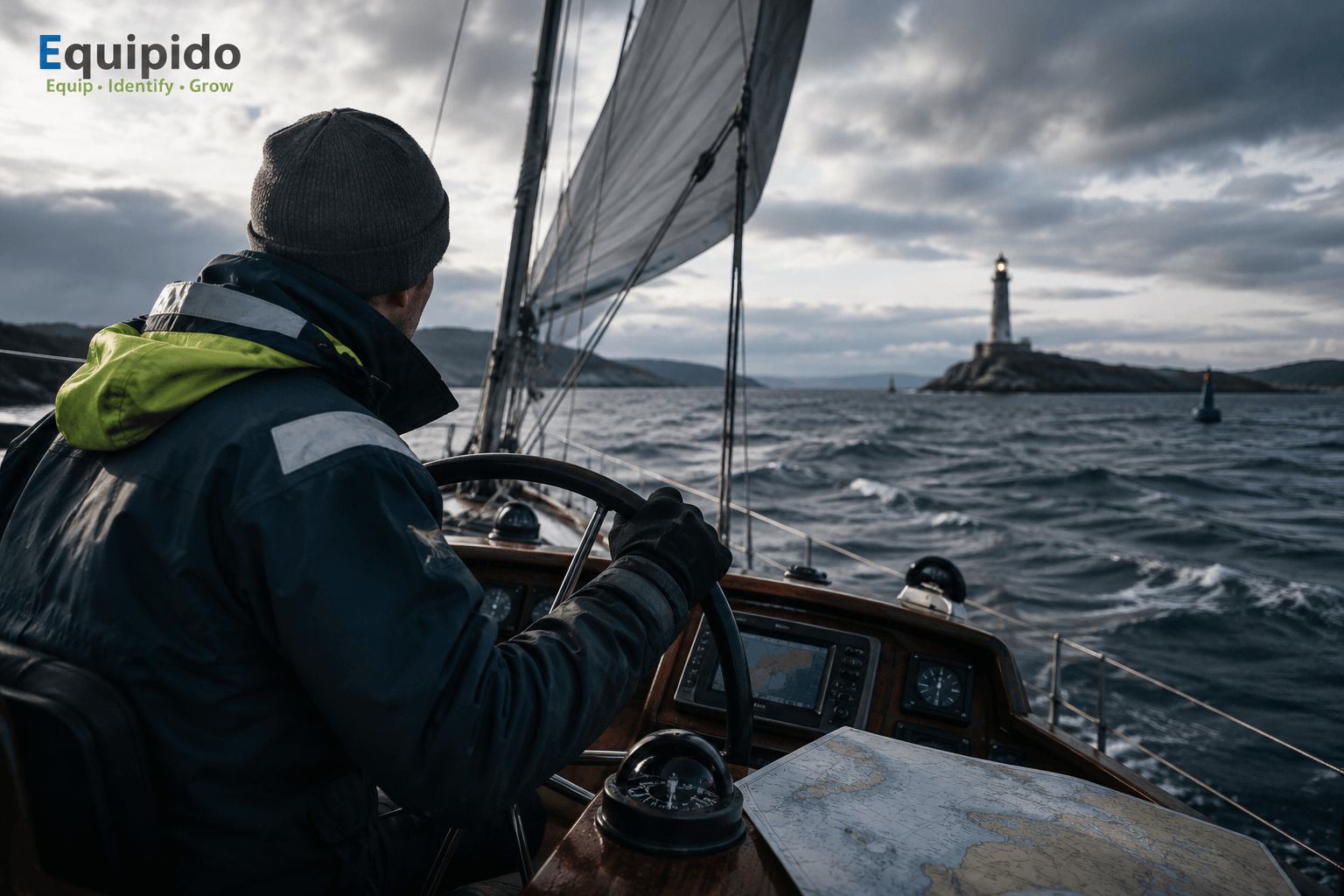
Navigation – Knowing Where You Want to Go Is Not Enough
Most of us understand the importance of having goals. We want to know where we are going, what we want to achieve, and perhaps even what kind of person we want to become along the way. But knowing your destination is not the same as knowing how to get there. You also need to know how to navigate.
Setting a Course Is Only the Beginning
Imagine a ship leaving one port and heading toward another. The destination is clear. The course has been calculated. Everyone knows where the ship is supposed to go. But that does not mean the ship can simply point toward the destination and continue without adjustment.
There is wind. There are currents. Weather changes. Other vessels may appear. Conditions change along the way. The ship constantly needs small course corrections. Life is not very different.
We can set a goal and have a clear idea of what we want. But once we start moving, things happen. We learn new things. Circumstances change. We make mistakes. Opportunities appear that we did not expect.
There is a saying I have always liked: Put your goals in concrete and your plans in sand.
Your destination can remain firm while the route toward it stays flexible. Changing the plan does not necessarily mean changing the goal. Sometimes adapting the route is exactly what allows you to reach it. That is what navigation is about.
You Can Be Moving and Still Be Off Course
There is an important difference between movement and progress. You can work hard every day. You can be disciplined. You can keep pushing forward.
But if your course is slightly wrong, the distance between where you intended to go and where you actually end up can become surprisingly large over time. That does not mean constantly changing your goals.
It means occasionally stopping and asking: Am I still heading in the right direction?
Sometimes the answer will be yes. Sometimes you only need a small correction. And sometimes you may realize that the route needs to change completely.
When You Cannot See the Way Ahead
I learned something about navigation very literally many years ago when I worked at sea. I had worked my way up on deck, and part of my job eventually involved steering the ship.
The first times I stood behind the wheel, we practiced out at sea. A large ship does not react like a car. When you begin a turn, you also have to understand when to counter the movement so the vessel settles on the correct course. An officer stood beside me and told me exactly what to do.
Later came something much more challenging: steering while entering a harbor. Now there were passengers on board, people eating and drinking, and everything had to be done smoothly. A badly handled turn could affect far more than their comfort. In some places there was shallow water outside the safe channel, so staying on course really mattered.
One experience has stayed with me in particular. We were approaching a harbor in very dense fog. I could barely see anything ahead of me.
We knew exactly which harbor we were going to. We knew where the entrance was. We knew the course. But from where I was standing, I could not see the way.
So I had to rely on the instruments in front of me and on the officer giving me instructions. A few degrees one way. A correction. Then another instruction. I concentrated on the course and followed what I was being told.
And then, through the fog, the lights at the harbor entrance appeared on either side of the ship. We were exactly where we needed to be.
That experience has become a powerful picture for me of how navigation works in life. Sometimes you know where you are going even when you cannot see the way there.
The Value of Another Perspective
This is also where another person can become incredibly valuable. You can certainly choose to navigate toward your goals and dreams completely on your own. But that often makes the journey harder and more uncertain than it needs to be.
A mentor can give you something that is difficult to give yourself: perspective.
Preferably, that mentor is someone who has already done what you are trying to do or has travelled a similar road. They know some of the currents. They recognize some of the obstacles. They may see that you are drifting long before you notice it yourself.
A good mentor does not take control of your life. They do not do the work for you. You still have to steer. But they can help you recognize when a course correction is needed.
Just as the officer on the bridge could see and understand things that I could not yet see for myself, someone with greater experience can sometimes give us a perspective we simply do not have yet.
Navigation Requires Confidence and Humility
I believe we should trust ourselves. We should believe that we are capable of learning, growing, and accomplishing things that may initially seem difficult.
But believing in yourself does not mean believing that you must know everything yourself. There is strength in being able to say: This is where I want to go. I am willing to do the work. But I am also willing to learn from someone who has travelled this way before me.
The goal is not to prove that you can travel alone. The goal is to reach the destination.
Keep Your Hands on the Wheel
Whatever you are working toward right now, perhaps the most important question is not simply: Where do I want to go?
Also ask: How am I navigating? What are you using as your instruments? How often are you checking your course? Who can give you a perspective that you cannot see from where you are standing? And when you discover that you have moved slightly off course, are you willing to make the correction?
You may not always be able to see the entire journey ahead. Sometimes there will be fog.
But if you know your destination, stay adaptable in how you get there, pay attention to your instruments, listen to experienced guidance, and make the necessary course corrections, you can keep moving in the right direction.
And eventually, the lights you have been navigating toward may begin to appear through the fog.
Related reading: Reaching your destination also requires being honest about whether your actions are taking you there. Read: It Starts With You.