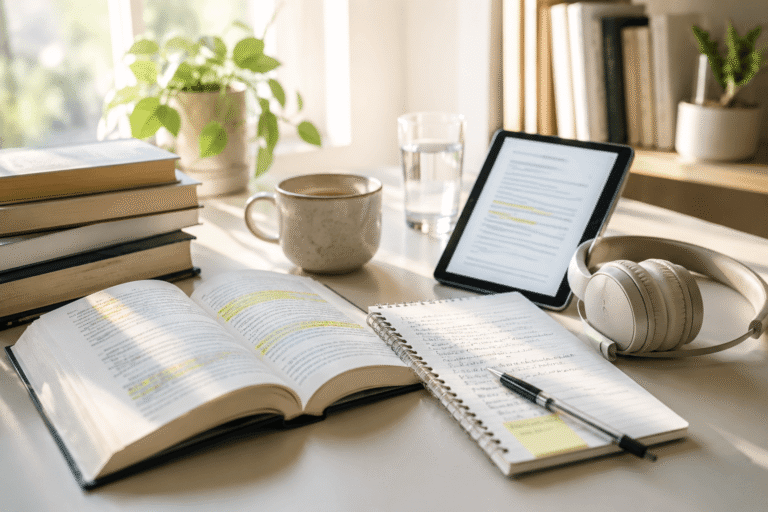
Your Mental Diet Is Shaping Your Future
Many of us think carefully about our physical health. We consider what we eat, how much we exercise, whether we are getting enough sleep, and what we can do to give our bodies the best possible conditions as we grow older.
But how often do we think about our mental diet?
Yes, you read that correctly: your mental diet.
What are you feeding your mind every day, and how is it affecting the person you are becoming?
Everything You Consume Leaves Something Behind
During an ordinary day, information enters our minds from many different directions. We watch the news, scroll through social media, listen to conversations, read articles, watch videos, and perhaps read books or listen to audiobooks.
Some of that content can give us knowledge, energy, inspiration, and direction. Other content can leave us feeling worried, frustrated, distracted, envious, or negative.
I am not saying that we should avoid reality or ignore everything difficult. Life is not always positive, and we cannot control everything that happens around us. But we can become more aware of what we repeatedly choose to consume and what effect it has on us.
After spending forty minutes scrolling through social media, it may be worth asking yourself: Do I feel better than I did before? Do I feel inspired to take action, or do I feel tired, irritated, dissatisfied, or discouraged?
The answer may tell you something important about your mental diet.
Social Media Shows a Picture, Not the Whole Story
Social media can affect us through conflict, complaints, and negative stories. But it can also affect us through comparison.
We may see someone’s home, relationship, holiday, success, or lifestyle and begin asking why our own life does not look the same. Their life appears happy, effortless, and complete, while ours may feel ordinary or difficult by comparison.
But social media rarely shows the whole picture. It shows selected moments, carefully chosen images, and often only the parts someone wants other people to see. Behind the photograph, reality may look very different.
When we compare our entire life with someone else’s best moments, we may create feelings of envy, inadequacy, or dissatisfaction based on a picture that was never complete in the first place.
At the same time, looking at someone who has achieved something you genuinely want is not necessarily envy. It can become inspiration.
Perhaps you follow someone who travels frequently, has built a successful business, developed a skill you admire, or created part of the life you would like to build. If what you see encourages you to take action towards your own dreams, then it may strengthen rather than diminish you.
The difference is often found in the feeling and response it creates. Does it make you think, “Why do they have that and not me?” Or does it make you think, “If it is possible for them, perhaps I can begin moving towards it too?”
We need to remain open to inspiration while also being critical of the images and stories we accept as the full truth.
Your Feed Learns From Your Choices
I have noticed that social media often gives us more of what we already choose to watch.
If we repeatedly stop for conflict, fear, complaints, or outrage, more of that type of content may gradually appear. But if we actively search for material that educates, challenges, motivates, or inspires us, our feed can begin to change in the opposite direction.
In my own feed, I now often see clips from people such as Jim Rohn and other material connected to personal development, growth, and success. That is still social media, but it does not affect me in the same way as aimless scrolling through negativity.
It gives me ideas, reminders, and new ways of thinking.
In that sense, we are not only consuming our feeds. We are also helping to shape them. Every click, pause, search, and choice teaches the platform what to place in front of us next.
That makes our choices even more important.
What I Have Noticed in Myself
I have been aware of personal development for many years. But knowing something does not mean that we always practise it consistently.
We are human, and sometimes we fall back into old habits.
During the six weeks before writing this blog, I became much more intentional about my own mental diet. Each day, I spent approximately ninety minutes developing myself. Around sixty minutes were spent reading, while the remaining thirty minutes were used to study material that I believe I need in order to change my thinking and move closer to my goals.
During my walks, I also listened to audiobooks and other material connected to the direction in which I want to take my life. This included books such as The Magic of Thinking Big and Psycho-Cybernetics, alongside other personal-development and business material.
At the same time, I spent much less time watching the news and much less time scrolling without a purpose.
The difference I have noticed in myself has been significant. I feel more focused, more positive, and more connected to what I want to achieve. I no longer feel the same need to sit and watch the news. When I use social media, much of what appears is now connected to growth, success, and the subjects I want more of in my life.
I have not become perfect, and I still sometimes fall back into old patterns. But that is also part of being human.
The important thing is to notice it and consciously choose what we want to begin feeding our minds again.
Where Is Your Mental Diet Taking You?
A single video, post, or news story may not change your life. But repeated inputs can gradually influence how you think, feel, and respond to the world around you.
They may affect your mood at work, how patiently you treat your family or partner, how you see your future, and whether you mainly notice opportunities or problems.
The question is therefore not only how something makes you feel today. It is also where that repeated influence may take you in two years or five years.
Is what you consume helping you become more focused, hopeful, disciplined, and connected to your goals? Or is it slowly moving you in the opposite direction?
We cannot control everything that enters our lives. But we can take greater responsibility for what we repeatedly choose to place inside our minds.
For one month, try becoming more intentional about your mental diet. Notice what gives you energy and what drains it. Choose books, audiobooks, podcasts, courses, and people who help you grow. Reduce some of the content that repeatedly leaves you feeling worse without giving you anything useful in return.
Then observe what changes in your thoughts, energy, relationships, work, and direction.
We often ask ourselves what we have eaten today.
Perhaps we should also ask:
What have I fed my mind?
Do your emotional patterns influence what you focus on and how strongly outside information affects you? Explore the Emotional Style Test.
Are your daily choices moving you towards the future you want? Explore the Goal Style Test.
Was this article helpful?
YesNo